
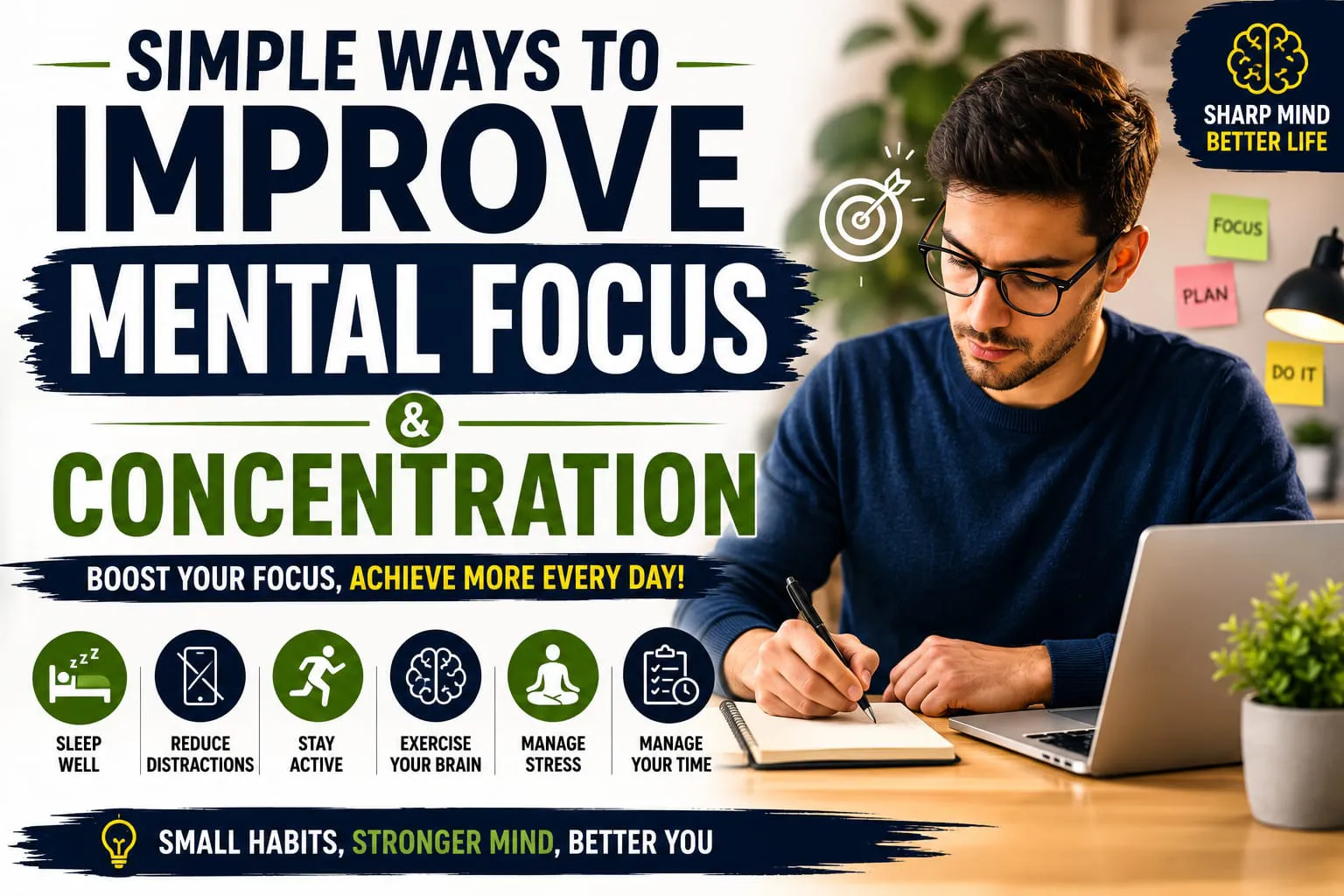
It can be hard to concentrate in today’s modern and hectic lifestyle. Distractions such as phone notifications, social media platforms, hectic and demanding lifestyle and daily tasks can interfere in your focus and get you away from the focus of your work, studies and personal commitments. You can enhance the clarity of your mind and focus better on work, studies, projects, etc by improving mental focus.
Concentration doesn’t just magically happen, you either have it or you don’t. It actually a skill that can improve by developing some beneficial habits, and you can do it through practices and changes in your routine that would allow your to better concentrate for a period of time.
In this guide, we share helpful and practical strategies that will boost your natural mental concentration, helping you build a habit that you’ll stick with and maintain all day long.
1. Get Enough Quality Sleep
Rest Your Brain To Perform Optimally You might have noticed a decrease in focus, ability to recall information and problem-solve ability if you’re not sleeping enough. In order to perform mentally, an adult needs quality, and reliable, rest every single night.
Establishing a bedtime routine, reducing screen use before bed, and sticking to a sleep schedule can all promote better sleep in the long run.
Healthy Sleep Habits
- Go to bed at the same time each night.
- Limit screen use before bedtime.
- Keep your bedroom quiet and comfortable.
- Avoid large meals just before sleeping.
2. Reduce Digital Distractions
These aren’t the kinds of interruptions caused by your ringing cell phone or email and social media popups. Not even brief interruptions from your mobile device, e-mail and social media accounts decrease your ability to concentrate and re-engage in the work you were performing.
You’ll focus better during the day if you switch off notifications that you don’t really need and dedicate specific time to answer them.
3. Practice Single-Tasking
You might think you get more done by multitasking, but jumping from one thing to another actually decreases how much you can do. Focusing on a single task means your brain can process more information effectively and produce better results.
Do one thing before moving on to the next if possible. Doing this one habit makes such a difference.
4. Stay Physically Active
The body and brain are strengthened by daily movement and exercise. Exercise helps our blood to circulation well, keep us active, energized and our minds alert.
Easy ways of increasing your focus like taking a stroll, cycling, stretching and yoga all contribute to an increase in your focus as well as decreasing any stress and exhaustion.
Easy Exercises to Try
- Take a brisk 30-minute walk.
- Practice stretching exercises.
- Ride a bicycle.
- Try beginner-friendly yoga sessions.
- Take short movement breaks during work.
5. Eat Brain-Healthy Foods
Eating a balanced diet will ensure your brain has all the support it needs to perform its jobs effectively. A diet rich in vitamins, minerals, antioxidants, and healthy fats helps our cognitive function.
Add fruits, veggies, and whole grains to your meals; healthy foods such as nuts, seeds, lean proteins and fats help boost concentration, while drinking plenty of water can do a lot for your brain function.
6. Practice Mindfulness
Mindfulness Meditation Mindfulness consists of focusing fully on what is happening, at this precise time. Training yourself regularly mindfulness, allow the practice to work its miracles of strengthening your attention span and combating the mental fatigue.
Try incorporating a few minutes of your day to practice mindfulness, paying attention to your breathing, or just noticing your environment without reaching for your phone or focusing on your to-do list.
Benefits of Mindfulness
- Improves concentration.
- Helps reduce stress.
- Supports emotional well-being.
- Encourages better decision-making.
7. Take Regular Breaks
When you work for a long duration your concentration levels tend to drop. However, a few minute of break will enable your mind to relax for a short while and return to work with new zest and concentration.
Why try taking 5-10 minute breaks every hour for 5-10 minutes and move, stretch, rest your eyes and get back to work.
8. Manage Your Time Wisely
Good time management techniques help you stay on track because it clear about what tasks need to be performed. Organize your schedule, establish priority orders, and delay as little as possible, you enhance your performance and concentration as well.
The Daily Routine A daily routine helps you to ensure you are able to find a dedicated block of time for you to do your most important jobs.
9. Exercise Your Brain
Your mind requires daily stimulation just as your body needs regular physical activity. Engaging your brain in learning, as well as testing it out with brainteasers can improve memory, focus, and the brain’s overall functioning.
Make sure you do things which continue to stretch your brain.
Brain-Training Activities
- Read books regularly.
- Solve crossword or Sudoku puzzles.
- Learn a new language.
- Practice memory games.
- Develop a new hobby.
10. Manage Daily Stress
A little can do us a whole lot of good In times of stress and uncertainty, focus and clarity is of paramount importance, as overstimulation will immediately trigger your focus onto something else other than what you are trying to get done.
Deep breathing, meditation, exercise, and getting into nature may improve your attention span.
11. Create a Distraction-Free Workspace
Your environment can impact concentration. Being in an organized, clutter-free, and quiet workspace will help reduce distractions and focus.
Only keep the necessary materials for the task that is to hand on the table and remove items that could divert your attention.
- Keep your workspace organized.
- Silence unnecessary notifications.
- Use comfortable lighting.
- Reduce background noise whenever possible.
12. Avoid Information Overload
Information never ends nowadays With unlimited sources you have all information available: you’re constantly reading news, checking your social networks, watching videos and jumping from one to another one. These may affect your brain concentration ability.
Don’t try to learn everything all at once: Tackle only one thing at a time. Cut back on information you do not require to have better mental processing.
13. Build Healthy Daily Habits
The way to strong concentration is through a consistent day-in day-out routine – there are no magic bullets. Sleep well, move your body regularly, eat a good diet, drink sufficient fluids, take time out for regular breaks and you will create optimum conditions to concentrate well.
If you can make small changes that you implement over time then you’ll be able to see significant changes in how you manage attention span and how much you get done.
Common Habits That Reduce Concentration
- Sleeping too little.
- Constantly checking your phone.
- Trying to multitask throughout the day.
- Missing meals and drinking less water.
- Working without having a break for an extended time.
- Keeping a cluttered workspace.
- Allowing frequent interruptions while working.
Frequently Asked Questions
Why do I lose focus so easily?
Poor sleep, stress, digital distractions, physical inactivity, lack of hydration, and disorganized surroundings can influence concentration levels.
Can exercise improve concentration?
Yeah. Keeping active is a sure way to encourage the flow of blood to the brain and it increases energy levels. Physical activity is likely to help increase attention span and a number of aspects of mental acuity as well.
How long should I work before taking a break?
After every 60-90 minutes of focused activity, a short break may benefit some. The optimal interval will be based on your work as well as your style.
Are brain-training games necessary?
While the brain games on your tablet or computer can be entertaining, good old fashioned reading, learning new hobbies or skills, tackling life’s many challenges, and incorporating the right health habits into your day will keep you sharp.
Conclusion
You may not need a lifestyle overhaul to improve mental concentration. Small, everyday behaviors – like getting quality rest, being active, limiting distractions, choosing healthy meals and handling your stress effectively – could pay off more in the long term than you think.
Keep in mind that concentration is like a muscle that grows stronger through repetition. By implementing and following these strategies, you can increase your productivity, make more accurate choices, and tackle your targets effectively.