
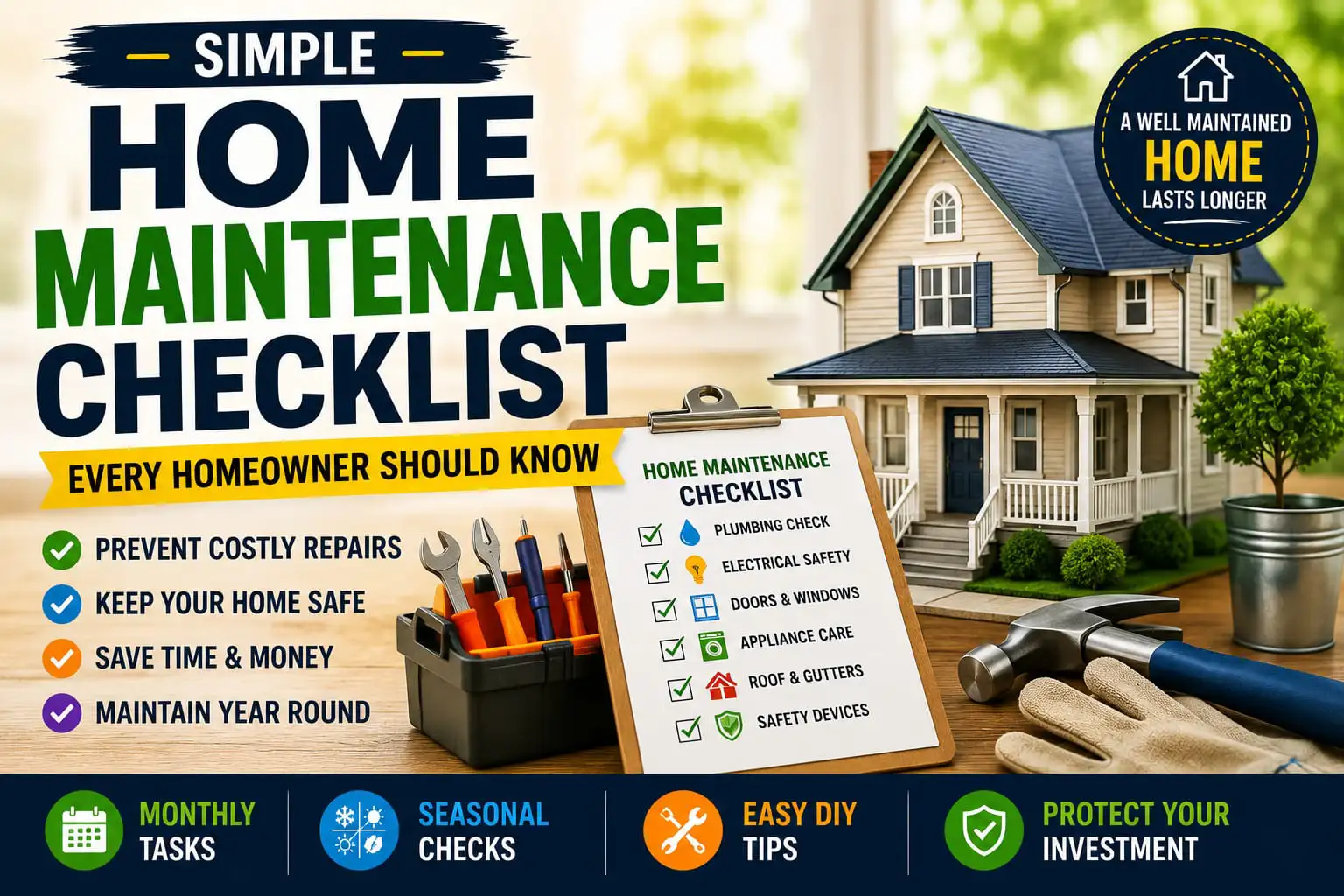
Your home is one of the biggest investments that most of us will ever make. But to maintain your house, you must invest time caring for your house. It is very easy for us to overlook many small repairs when nothing seems to be going wrong. Early signs of trouble can often lead to costly problems later.
Many homes don’t actually need to call in professionals to keep up on their upkeep. Basic maintenance issues in any home from ventilation to plumbing can be as simply addressed as inspections and minor attention.
This kind of maintenance routine will also assist with recognizing and catching unusual sounds or leaks and wear – before these get problematic. Rather than wait for something to fall apart totally in the middle of doing something it isn’t possible to put off, checklist approaches assist to remain properly arranged around.
This post provides an in-depth look at simple home-maintenance practices, one of which every homeowning household ought to undertake.
Why Regular Home Maintenance Matters
The property system requires proper maintenance. From simple things like dripping tap, blocked drain, seal broken, dirty filter you may consider there no matter it comes to your house even though from very early stage if they keep persist they cause damage in the house like you have to undergo serious plumbing issue, electricity hazard, etc.
A house being inspected on a regular basis is also the occasion to know how the house is performing and notice areas which need some special maintenance.
Create a Home Maintenance Schedule
It can be really confusing trying to keep track of everything that needs to be maintained. Writing out an uncomplicated schedule can help you ensure you haven’t forgotten cleaning & maintenance routine checks.
I do my maintenance work out on a monthly, seasonally and yearly basis. This helps with house maintenance, so there aren’t tasks just sitting there at the last minute to do.
1. Check Plumbing Fixtures Regularly
Signs of potential plumbing issues often appear as relatively minor symptoms, for example drips, slow drains, odours or moisture around pipes. Having a quick look into sinks, toilets, taps and exposed pipes will enable you to identify possible plumbing problems early on.
Things to Check
- Look for visible leaks around sinks and pipes.
- Check whether taps are dripping.
- Make sure drains are flowing normally.
- Inspect areas around toilets for unusual moisture.
- Pay attention to unexpected changes in water pressure.
2. Inspect Doors and Windows
Doors and windows give your home protection against the elements, dust, noise and unwanted air escaping. See if they are working correctly and if the seals look fine.
Dirty tracks or broken-down hinges can also cause the doors and windows not to function properly.
3. Clean and Replace Filters
Household appliances: Many household items work with the aid of filter, preventing the entrapment of dust or the passage of certain particles. A filter may eventually become dirty and less efficient in helping the appliance to operate, putting added strain on the item.
Read each appliance or device’s manufacturer guidelines to identify when your filters must be cleaned or changed.
4. Check Electrical Safety
A regularly checked electric supply wiring wiring should also be provided since a bad wire, connections loosen or a overloaded wiring device outlet might pose a great danger to any individual at property it serves, homeowners could check on electrical outlets on regular and observe.
If you detect sparks, burning odors, recurring circuit breaker trips, damaged wiring, or warm outlets, don’t try to do complex electrical repairs on your own. Severe electrical hazards should be examined by a competent electrician.
Simple Electrical Checks
- Look for visibly damaged power cords.
- Avoid overloading electrical outlets.
- Check that switches and outlets operate normally.
- Keep electrical equipment away from water.
- Test safety devices according to the manufacturer’s instructions.
5. Maintain Kitchen Appliances
Cooking appliances actually perform better when you keep them well-maintained and clean, and a cleaning schedule might even add years to their lifespan.
Clean refrigerator coils when needed. Remove food build-up from oven interior and microwave, checking cords for damage or breakage. Stick to manufacturer’s cleaning guidelines when it comes to cleaning appliance cords.
6. Keep Bathrooms Clean and Dry
In the case of a bathroom, where moisture is common on a daily basis, ventilation and proper cleaning are of utmost importance. Excessive damp can lead to a variety of problems within the home, including odors and staining, among others.
- Clean bathroom ventilation areas regularly.
- Check around sinks and toilets for leaks.
- Keep shower areas dry when possible.
- Inspect seals around tubs and sinks.
- Clean drains regularly to reduce buildup.
7. Check Roof and Ceiling Areas
In essence, roof to do its job in shielding your from rain, wind, snow and any other element; some routine check that are accessible (with in your reach) can possibly lead your to prevent any waterdamage problem.
Ensure to check if there is any kind of signs of watermark, water marks, and other material damages at the roof or ceilings. Areas which need to be checked require height safety standards. You should check for the right qualified expert to handle the inspection on such difficult accessible areas.
8. Maintain Gutters and Drainage Areas
If your gutters and drainage channels are blocked, rainwater will not flow efficiently away from your house. This is because leaves, dirt, and debris can accumulate over time and clog your water channels.
Check out on of my regular reviews at the site by accessing gutter.biz at gutter.biz If you want your own house or a customer’s gutters and roofline cleaned by a top notch crew contact our guys at and order gutter gutter and roofline cleaning.
9. Inspect Outdoor Areas
You’re going to need to put some time into your landscaping. A great trick to keep things in check around the house to go around your property once a while and you’ll quickly spot surfaces in need of repairs, objects loose from hardware, areas drainage must be kept clear, weeds are growing where they ought to not exist.
Maintaining and keeping the outside of your house clean adds to its looks as well as usefulness.
10. Maintain Smoke and Safety Devices
Check the proper functioning of safety devices such as smoke detectors and carbon monoxide detectors if available, per manufacturer instructions. Change batteries/devices when necessary, and never disregard alerts.
The maintenance and care of these machines, no matter how automated, may sound very basic – however these devices are a vital step to following fully.
Create a Monthly Home Maintenance Checklist
A regular monthly checklist is a good way to keep on top of routine maintenance work. You do not have to inspect your entire home every day, all you require is to schedule a short time per month to inspect certain parts, that are prone to damage, each month.
- Check for visible plumbing leaks.
- Inspect doors and windows.
- Clean commonly used filters according to manufacturer instructions.
- Check smoke alarms and other safety devices.
- Look for signs of moisture or water damage.
- Inspect appliances for unusual sounds or performance changes.
- Clean vents and accessible areas where dust accumulates.
Seasonal Home Maintenance
Certain maintenance are more suitable for certain seasons. Be ahead of unexpected problems by getting your house ready for severe weather. Take preventative measures so your home can remain as comfortable as possible regardless of the season.
Test your drainage to see if there are any apparent leaks during times when there’s expected rainfall. During colder times of the year, focus on your plumbing and heating (where fitted). Your ventilation systems, outside areas, and any equipment which might get more usage are what you want to focus on during hotter times.
Common Home Maintenance Mistakes to Avoid
Some Home owners tend to be obsessed with only the visible symptoms but in so doing often overlook the subtle cues which might give you early hints to some inexpensive maintenance which, ignored, will soon develop into very expensive repairs later.
- Ignoring small leaks or damp spots.
- Delaying necessary maintenance for too long.
- Overlooking appliance maintenance instructions.
- Attempting complicated electrical or structural repairs without professional help.
- Failing to keep records of important maintenance work.
Keep a Record of Home Repairs
Simple records of repairs, services (appliances), replacements, and inspections help with future maintenance. You could create records on paper (a notebook), a spreadsheet, or a document.
A maintenance log is useful in keeping track of when services were performed on your home, and is a valuable planning aid when selecting repairs or replacing appliances.
Frequently Asked Questions
How often should I perform home maintenance?
You can have some simple checks carried out once every month, with more intensive ones done perhaps seasonally and even once a year! The best schedule can vary with a number of factors, including your home’s structure, climate, specific equipment, and of course the manufacturers recommendations!
Can I do home maintenance myself?
Most of us feel reasonably comfortable with easy activities, like sweeping, wiping away some dirt, or even replacing the occasional disposable furnace filter. But when it comes to wiring, framing, roofing, pipe fitting or gas line jobs, it’s generally better – and safer – to hire qualified trades people to get the work done.
Why is preventive maintenance important?
Proactive maintenance can detect and address small issues before they develop into major ones. Furthermore, taking good care of domestic devices can reduce expensive emergency repair bills
What should I check first if I have limited time?
Start with hazards to safety or the potential for widespread destruction, e.g. Seeing a leak, receiving an electrical warning, smoke alarms activating, flooding, symptoms of system breakdown.
Key Takeaways
- Regular home maintenance can help prevent small problems from becoming major repairs.
- Create monthly and seasonal checklists to stay organized.
- Pay attention to plumbing, electrical systems, appliances, ventilation, and drainage.
- Follow manufacturer instructions when maintaining household equipment.
- Use qualified professionals for complex or potentially dangerous repairs.
- Keep a record of important inspections, repairs, and maintenance work.
Conclusion
A well-cared for home is, more often than not, safer, more cozy, and much more easily cared for. Caring for your home doesn’t always mean big projects; simply performed inspections and routine jobs done consistantly will alert you to a problem much sooner than will pass it by and cause real harm to your home in the future.
The most pragmatic way to do so, however, is to have a realistically manageable schedule for your household. Through regular checks in the critical components, swift attention to warning signs and timely requests to professionals when needed; you can ensure your home runs optimally and avoid an endless wave of unnecessary unexpected events.