
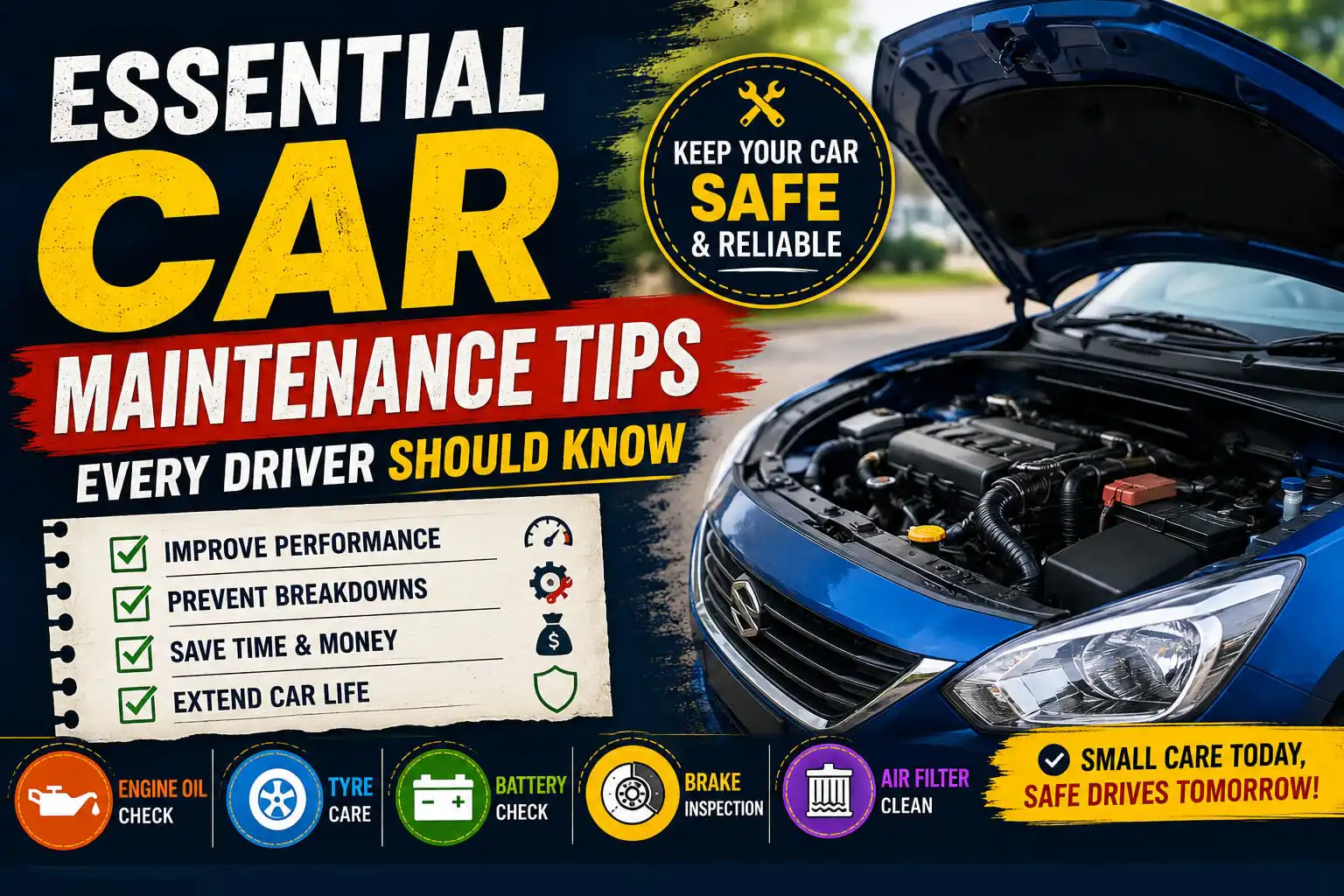
Driving can make a lot of tasks easy and convenient, but you still have the responsibility to take care of your car. Many cars may be operating correctly even though there are slight issues going on, but you may end up spending a lot for a repair or break down the hard way.
Car upkeep doesn’t even suggest a garage checkup at any kind of moment for the simplest task. There are things any car owner could deal with as very little than an element of regular service. Fluid checks, watching tire quality, paying attention to funny noises, and conforming with producers’ scheduled visits can facilitate maintain vehicle functioning smoothly.
Good maintenance can even add to driving safety, help protect costly components, and increase the expected longevity of a vehicle. The “trick” is to recognize little problems before they fail completely.
In this guide you will discover the basics of car maintenance that every driver should be aware of. You will also find a couple of easy habits you can incorporate to help maintain the condition of your vehicle better.
Why Regular Car Maintenance Matters
Any car is made up of thousands of parts-both electrical and mechanical, that must work together to run efficiently all the time you are on the road-each time you go for a ride. All parts inside of your car-even the ones that seem to run optimally all the time, tend to wear down with time and usage.
Checking over the vehicle regularly and scheduling services are ideal ways of catching broken, tired or fluid issues and things along those lines before they become problems.
1. Check the Engine Oil Regularly
Engine oil lubricates all the moving parts within your engine and, with its excellent frictional properties, contributes to preventing wear when an engine is run with the correct oil.
Verify the level of the oil, following manufacturer’s recommendation to use: the type of oil recommended; use with specification required.
What to Watch For
- Oil levels that are consistently low.
- Visible oil leaks under the vehicle.
- Unusual engine noises.
- Warning lights on the dashboard.
- Oil that appears unusually dirty when checked according to the manufacturer’s procedure.
2. Look After Your Tyres
One of the most vital safety parts of your vehicle are your tyres because it connects the car to the road. Low or over inflated tyre pressure, a damaged tyre or one with very worn out treads can all make steering and breaking difficult.
Always have the tyre pressure checked and make sure that you are always using the recommended pressure that the vehicle manufacturer has listed. Check for signs of excessive wear and unusual cuts, splits or any other visible damage to either the tread or the sidewalls of the tyre.
3. Pay Attention to the Brakes
The brakes on your vehicle are particularly important, as they need to operate reliably for you to drive safely. It is very important never to ignore altered braking performance.
Should you experience strange noises, an unnatural amount of vibration from your car, a soft or squishy pedal when you press the brakes, or a difference in your car’s normal ability to brake have the vehicle looked at by your qualified technician.
4. Take Care of the Car Battery
The battery helps to start the vehicle’s engine by supplying its electrical power source, and also powers a number of the other vehicle’s electrically controlled systems. The performance and reliability of your vehicle’s battery may start to lessen over time, and can be damaged by temperature extremes, or long periods of inactivity.
Keep a lookout for a slow-cranking engine, faint interior or exterior lights, or anything else weird electrical-wise. If the battery, its terminals are corroded or are visibly damaged then seek the attention of a qualified auto specialist.
5. Check the Coolant System
It keeps operating temperature within the range and prolongs the life of the cooling system. Lack of engine coolant can trigger overheated issues that might damage cooling system. When engine coolant becomes lower than required level due to a cooling system failure may cause overheat of engine system.
Only check the engine coolant level according to the directions in your owner’s manual and do not remove the radiator cap of a hot cooling system. If you repeatedly experience loss of engine coolant, visible leaks, or overheating, you should have your vehicle checked as soon as possible.
6. Replace Air Filters When Necessary
Air filters help to stop dirt and dust from getting into key vehicle parts. As the filter ages it might get full and become contaminated to a certain amount as set out in the makers specified vehicle servicing regime.
It’s essential that you replace yours at the intervals specified by the vehicle’s manufacturer to keep things working properly and to avoid working parts to death.
7. Don’t Ignore Dashboard Warning Lights
New vehicles typically rely on illuminated dashboards as indicators of the type of warning light. Certain symbols may relate to simple malfunctions whereas others could signal the existence of potentially hazardous conditions.
Always use your owner’s manual to tell you about the warning light you received. Should that light indicate a problem with major significance – you’ll find information here on many, and they’ll be fairly obvious even in the book – cease driving when it’s appropriate, pull over and have your vehicle inspected.
8. Check Headlights, Indicators, and Wipers
Good vision means for your safe ride. Be on the look-out, ensure that the headlights, tail lights, turn indicators and all exterior lights in the auto are good and that these signal lights are functioning in auto.
The windshield wipers are another important item to check routinely. A streaking or skipping blade, or one with damaged rubber will compromise visibility while driving in the rain and the blades will need to be replaced.
9. Follow the Manufacturer’s Service Schedule
For your vehicle, this will have an advised schedule for checks and things to replace – it usually depends on how many miles the vehicle has covered, how long it has been since the last, engine size and the conditions under which the car is regularly driven in. This schedule is designed to make sure critical inspections and components are not missed out.
Maintain a record of services performed, repairs completed, and parts replaced. A logbook can really help in remembering service dates and service needed for the vehicle.
10. Pay Attention to Unusual Changes
There’s a phenomenon in the auto repair industry where you (the vehicle owner) notice changes that haven’t yet become readily apparent during professional service. These could be things like a new vibration, an odd odor, a strange sound, a modification in your vehicle’s steering capability, or decreased performance levels.
Rather than keep driving and praying that the strange problems will just go away; get your peculiar modifications examined by an expert when it seems fit.
Common Car Maintenance Mistakes to Avoid
You may drive perfectly well, yet you might still neglect basic car checks that any careless or hurried driver might skip. If you would like to avert unpleasant surprises and to take great care of your car, then it really is worth trying to remember a couple of guidelines that each motorist ought to follow.
- Ignoring dashboard warning lights.
- Delaying scheduled servicing for too long.
- Driving with visibly damaged or underinflated tyres.
- Ignoring unusual sounds, smells, or vibrations.
- Using incorrect fluids or replacement parts.
- Skipping regular checks because the vehicle appears to be running normally.
A Simple Car Maintenance Checklist
Using a simple vehicle maintenance checklist can help you to stay organized and on top of basic car maintenance and upkeep. Individual manufacturer recommendations will also dictate maintenance schedules for vehicle so be sure to consult yours.
- Check tyre pressure and condition.
- Inspect engine oil as recommended.
- Check visible fluid levels.
- Test exterior lights.
- Inspect windshield wipers.
- Pay attention to warning lights.
- Keep scheduled servicing up to date.
- Record important maintenance and repairs.
Frequently Asked Questions
How often should a car be serviced?
The recommended service intervals for a vehicle, depends on your car, engine, how many miles it has covered, how old it is, as well as how your drive! The most ideal and easy way to guide you on exactly when to take service schedule at its most precise is by the manufacturers suggested service schedule.
How often should I check my tyre pressure?
Tyres Should be:Checked frequently for condition & also before long drives. Ensure vehicle’s tyre pressure is set by the manufacturer as per vehicle spec’s. Don’t guess!
Can regular maintenance extend the life of a car?
Maintaining a clean and orderly system reduces undue wear and keeps critical parts in excellent service, helping to address possible problems before they occur.
Should I ignore a small warning light if the car is driving normally?
No. Don’t disregard warning lights, even if the vehicle appears to operate normal. Consult your owner’s manual; service vehicle when required.
Key Takeaways
- Regular maintenance helps keep a vehicle safe and reliable.
- Tyres, brakes, fluids, battery, lights, and filters need appropriate attention.
- Following the manufacturer’s service schedule is important.
- Unusual sounds, smells, vibrations, or warning lights should not be ignored.
- Complex repairs should be handled by qualified automotive professionals.
Conclusion
Keeping a car up-to-date shouldn’t feel overwhelming, and while it can seem tedious, taking note of a few key things can really contribute to owning a resilient automobile. Making a habit of inspecting tyres, keeping a close watch on all car fluids, adhered to regular service timings and keeping a mindful note of changing conditions, you will surely thank yourself in the end result.
It should also be noted that cars have their unique needs and requirements, thus drivers should make their cars owners’ manuals readily available. Always review the owner’s manual and service guide of your vehicle for specific manufacturers requirements for that particular vehicle. Following routine maintenance will prevent future complications for your ride making your travels reliable.