
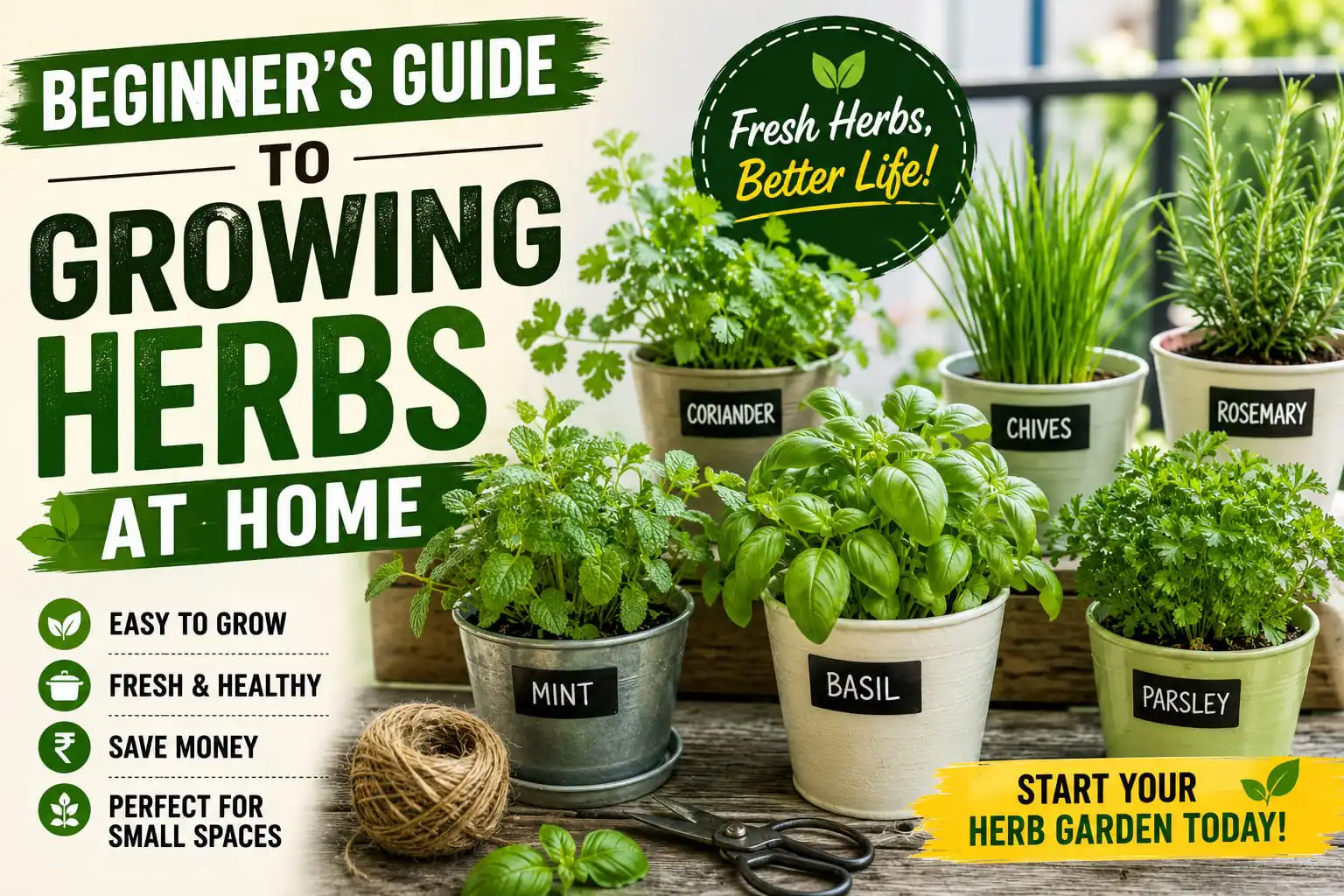
Growing fresh herbs at home can be a very enjoyable and fairly inexpensive hobby. Not to mention, you don’t require a huge outdoor plot of land to start enjoying home grown, fragrant herbs at their peak! Many can be grown in tiny kitchen corners with nothing more than appropriate pots, soil, ample light, and a little watering time from you.
Growing you own fresh herbs not only spruces up everyday meals you it it brightens your house while making it feel more lived in. Herbs provide you an excellent way to bond with your plants & form a enjoyable and also low stress and anxiety outside or house outdoor activity.
Regardless if you are working within the bounds of a yard, have a tiny balcony in an apartment or simply got a sunny window sill on your home, you’ve got growing space for herbs.
This basic guide will show you how to pick suitable herbs and pots to use, and how to prepare the soil for growing and then look after your plants.
Why Grow Herbs at Home?
Bringing herbs into the home provides some realistic advantages. Fresh herbs can be time-savers when cooking and tending the plants can turn into a welcome daily task.
- Provides fresh herbs for cooking.
- Makes small spaces greener and more attractive.
- Can be started with a relatively small setup.
- Offers a simple way to learn basic gardening skills.
- Creates an enjoyable hands-on hobby.
Choose Herbs That Suit Beginners
Different kinds of plants come with different levels of difficulty for new gardeners – choose a few easy plants for you to practice on so you don’t feel overwhelmed.
Popular Herbs for Beginners
- Basil
- Mint
- Coriander
- Parsley
- Chives
- Rosemary
How to Grow: Selecting Herbs You will need to match your herbs with the sunlight, space and climate conditions of your region. Some herbs are much more suited to specific conditions.
Choose the Right Location
Sunlight is certainly among the most crucial elements for cultivating vibrant and nutritious herbs. Most of the familiar culinary herbs require several hours of daily sun-exposure.
If a sunny balcony, terrace, a garden spot or a sunny windowsill may do-all depending of plant requirements and local circumstances.
Select Suitable Containers
Herbs can also be planted in a pot, planter, or suitable container. The plant should have sufficient space to allow the roots to grow and the container should have drainage.
Roots can remain in standing water if the container does not drain properly and may cause some trouble. Choose a container that will suit the herb.
Prepare the Right Soil
In order to allow the herbs to get optimum nourishment, support, and moisture, it is necessary to utilize the good source of healthy soil which is known by nature as potting mixes. This good type of soil also allows proper and suitable drainage system for indoor planters.
We avoid useing large amounts of heavy soil so that it is not staying wet too much long time. Soil that well drained is needed especially for plants which grow on pots: this could help to avoid problems related with water around roots of herbs
Plant Your Herbs Correctly
Allow enough room for the plants when setting out herbs. Keep to the recommendation spacing for the individual herb and don’t crowd a lot of plants into one small container.
When starting from seed, be sure to read the instructions on the seed packet closely, paying attention to seed depth, spacing and optimum germination temperatures and conditions. If starting with young plants, handle the roots gently when repotting.
Water Your Herbs Carefully
Watering Care of herbs is an art but do keep in mind, extra water doesn’t necessarily guarantee you a healthy looking herb; amount varies based on herb type, container, soil composition, temperature and your living situation!
Instead of watering on a schedule, feel the soil first. Water the plant deeply when the top layer feels dry and it needs water, but drain away the excess.
Common Watering Mistakes
- Watering automatically without checking the soil.
- Allowing containers to remain constantly waterlogged.
- Ignoring plants during very hot or dry weather.
- Using containers without proper drainage.
Provide Enough Sunlight
Culinary herbs usually appreciate a bit of sun; although this can vary from one plant to another you’ll find it beneficial to position your plants in as much good light as necessary.
A sunny window may prove to be the best place to keep herbs if you are growing them indoors. Rotate plants periodically if one part of the plant seems to be getting more light than another part of the plant.
Feed Plants When Necessary
In fact, container herbs use soil sparingly so the plant will be starved for nutrients eventually and will need an occasional boost during its growing cycle to thrive well. What you’ll feed your container-herb plant will vary due to the kind of potting mix and herb species.
Use your fertilizer in moderation following the manufacturer instructions on the label – don’t use more than necessary to protect plants from damage.
Prune and Harvest Regularly
Encourage a new plant with frequent harvesting Herbs do re-grow if harvested frequently. When you’re ready to get a sample of your plants, use the cleanest set of scissors, or garden shears that you have, and do not take too much from the plant on one go.
The practice of pinching and snipping can result in a fuller growth with basil among others – the point being that each herb can require different cuts so educate yourself on your herbs.
Protect Herbs From Pests
Some herbs may tend to draw pests and other garden pests. Be sure to examine the plants often and keep an eye for plants with nibbled leaves, unusual marks or seeing pests around. The faster you notice trouble, the better prepared you’ll be to deal with it.
Keep your growing area tidy and remove leaves where necessary. If you’ve got a bad bug issue, try and find out which pest it is so you know what treatment to apply and use it according to the instructions given.
Common Beginner Mistakes to Avoid
For the most part growing your own herbs is pretty darn easy to do, but beginner growers often make some basic mistakes. Taking notes about these will assist with growing greener habits.
- Overwatering plants.
- Using containers without drainage holes.
- Choosing a location with insufficient light.
- Planting too many herbs in a small container.
- Using too much fertilizer.
- Ignoring signs of pests or plant stress.
Frequently Asked Questions
Can I grow herbs indoors?
Yes, most of your favorite herbs grow very easily in house if given enough light, in a decent pot size and you give them the required attention. They’ll grow just fine in a bright sunny position in many cases.
How often should I water herbs?
All herbs have different watering needs. Feel the soil of your herbs regularly and adjust the amount and frequency of watering according to humidity, room temperature, the pot in which the herb is kept and the requirements of that particular herb.
Can I grow different herbs in the same container?
Certain herbs can be grown together in a single container as long as their requirements for light, water, soil, and space are similar. For instance, although most herbs like plenty of light, many others dislike constant sunlight. Some also need a lot of space for their roots.
How long does it take to grow herbs?
In some cases the increase is fairly drastic; some herbs you may be picking a matter of days, while others require a year or two before you reap the benefits. Obviously it depends also on the variety and even on you, the grower… and, as I mentioned, whether you began with young plants or seeds!
Key Takeaways
- Select herbs that will suit the space you have available and the conditions you can offer them.
- Use containers with adequate drainage.
- Provide suitable sunlight and avoid overwatering.
- Follow the recommended care instructions for each herb.
- Harvest and prune plants carefully to encourage healthy growth.
- Check plants regularly for pests and signs of stress.
Conclusion
Growing your own herbs at home is a great introduction to gardening, bringing plants into your home life. You don’t need to be an expert to be able to grow your own herbs; all that you require is a pot or two, the correct soil, a good amount of light and a reasonable degree of care.
Begin by learning about one or two forgiving herbs and watch them behave to see how they will react in your space. As you begin to enjoy this rewarding pastime, try more new kinds until you have yourself a little home herb garden.