
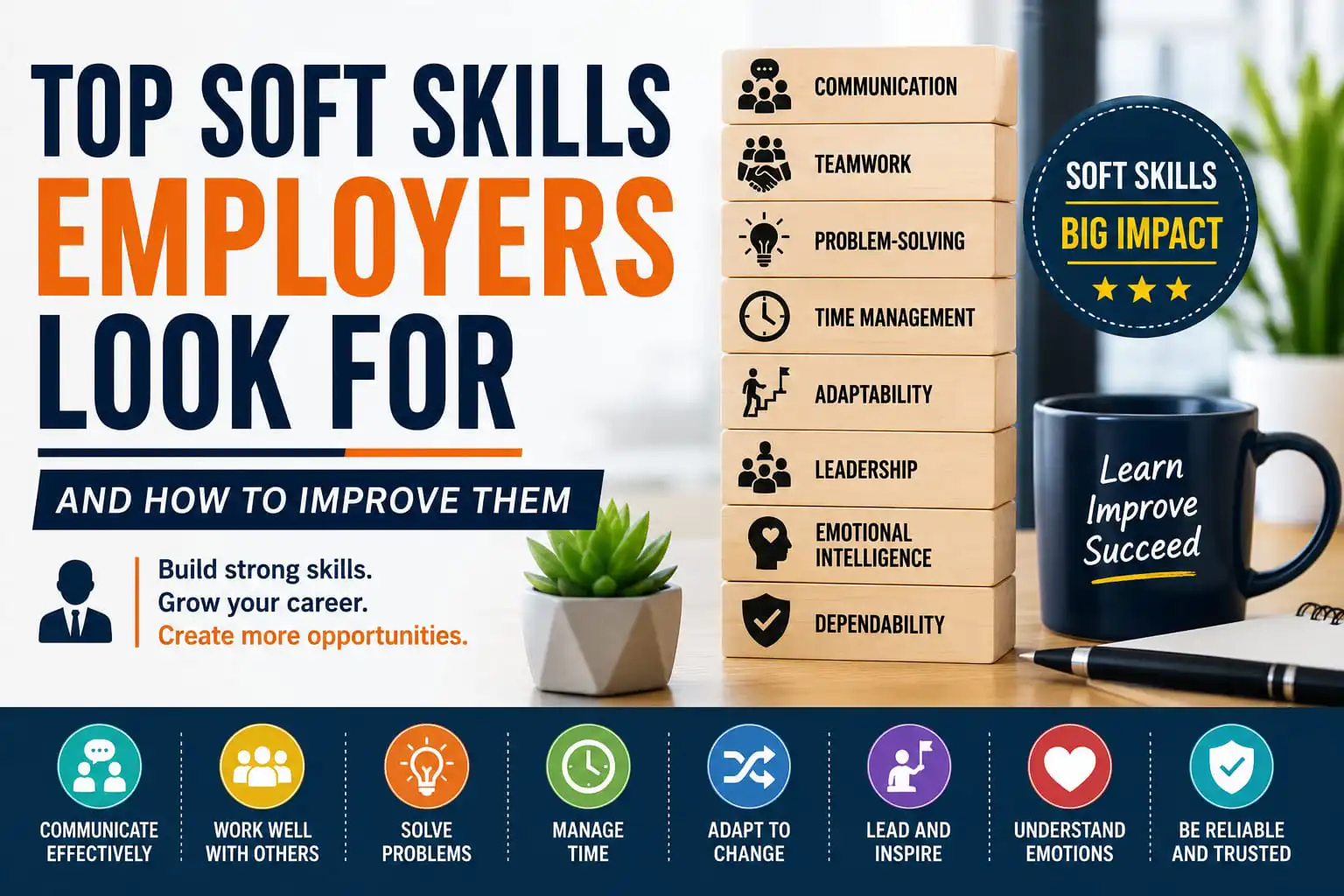
While technical and job skills are significant, they are not the only criteria for employers’ preferences. In today’s business environment soft skills are the main contributors to successful communication, teamwork, problem-solving, and adjustment.
Soft skills are your interpersonal characteristics and communication skills that affect how well you work with people and can cope on a job. Technical Skills Soft Skills – the application is quite similar to soft skills except these kind of skills would differ from job to job to industries but still can work around almost every profession.
Whether they are students, newly graduates, those seeking new positions or experienced individuals-these new softer abilities skills might enable them for example to more assured plus present a well balanced personality to future opportunity.
Soft skills: a must have for job seekers This guide covers soft skills for beginners: find out what you are, why soft skills are importance, what the most asked soft skills by head hunters you need to get prepared to answer at a job interview.
What Are Soft Skills?
Soft skills Soft skills refer to your abilities and traits in terms of communication, time management, self motivation, problem-solving, stress tolerance etc. The other way round… soft skills reflect upon working with other people, whether colleagues, your manager or customers of your company. Soft skills influence how people conduct and interacts.
Soft skills develop over the course of a person’s life in their real-world experiences. Unlike technical skills that are usually obtained through structured job training or education, soft skills grow through practical, real life learning experiences
Why Are Soft Skills Important?
These can add value in their team and organizational dynamics because of skills in interacting positively, good communication style and adaptability with dynamism to change of time and working in multifaceted organizations for collaboration work or client or to increase productivity in the place of employment or for individual growth.
Many employers feel that soft skills are just as essential as a degree and may be the difference between years of career success.
1. Communication Skills
The top skills for most jobs most closely ties into the concept of communication: skills in listening, speaking, writing, and, in general, respectful articulation.
Good communication helps avoid misunderstandings, develop team collaboration, and build stronger professional relationships with others.
Ways to Improve Communication
- Practice active listening.
- Speak clearly and confidently.
- Read regularly to improve vocabulary.
- Write emails professionally.
- Ask questions when instructions are unclear.
2. Teamwork
Workers in the majority of businesses now have toworkwith a number of people. TeamThe process that teams involve being respectful of their peersopinions, have a division of labour, work positively along colleagues and achieving objectives that have beensettogether (like teamwork.html, no page year).
Teamwork People who make an effort on a team typically improve the work team dynamic and the productivity team of an employer.
3. Problem-Solving Skills
Each work environment has its own problems, such as meeting with deadline or dealing with the complaints of customers. As far as employers are concerned, they appreciate people who can come up with reasoned ideas and evaluate all the aspects to get the feasible solutions, not only to identify problems.
Developing problem-solving abilities will also enhance daily work output to support decision making more appropriately.
Ways to Improve Problem-Solving
- Break large problems into smaller tasks.
- Gather all relevant information before making decisions.
- Consider multiple solutions before choosing one.
- Learn from previous experiences and mistakes.
- Stay calm when facing unexpected challenges.
4. Time Management
Better time management allows employees to complete assignments by their deadlines, and without having to compromise. When people are good at time management, it also helps them get to the less urgent duties eventually. This can ease stress and can let individuals focus on significant concerns.
The ideal candidate will respect deadlines and manage their tasks.
Ways to Improve Time Management
- Create a daily task list.
- Prioritize high-impact tasks first.
- Avoid unnecessary distractions while working.
- Break large projects into smaller milestones.
- Review your progress at the end of each day.
5. Adaptability
Today’s world is one of constant and rapid change as technologies, processes and business need evolve. Our workplace is no different, this is our ability to cope productively with changing times and circumstance – adaptability.
If your employees are willing to learn and flexible they tend to perform well in the working environment as circumstances keep change.
Ways to Improve Adaptability
- Be open to learning new skills.
- Accept constructive feedback professionally.
- View change as an opportunity to grow.
- Stay curious about industry developments.
- Practice a positive attitude during transitions.
6. Leadership
It’s not just the people with the title who should demonstrate leadership! All of our staff at any given level should take the initiative and also support their team mates in their work, thinking logically, and help them make informed choices as you progress towards achieving the objectives you are seeking as a team.
Over the course of the coming years, and years the developing on of a skill to being a leader could open avenues of employment, as well as more confidence professionally.
7. Emotional Intelligence
The Capacity To Recognize And Handle Emotions Of Your Own While Consistently Making Cognizance Of Others’ Responses This aptitude helps nurture your workspace relationships while promoting good verbal and body-word transmission skills.
Employees who are high in EI (Emotional Intelligence) can manage conflict effectively at the work place.
8. Dependability
Reliable workers deserve that trust. They demonstrate their worth to their bosses, time and again, by being consistent performers and by projecting a positive demeanor. Everyone values trustworthiness in his or her workers, regardless of what industry they’re in.
Being dependable involves showing up when you say you will, following through on your promises, and owning the things you do – all simple, yet profound steps to be truly seen as reliable.
9. Continuous Learning
The working world is consistently being reinvented and changing due to technology, technology tools and industry trend. Employees with ability to constantly develop and to add a value throughout life long.
People who continue to educate themselves can display leadership qualities, initiative and a drive for professional improvement. Also, employees who keep learning often have a greater capacity to adapt to workplace changes and future career paths.
Simple Ways to Keep Learning
- Read books and articles related to your field.
- Take online courses to develop new skills.
- Attend workshops or webinars when possible.
- Ask experienced professionals for guidance.
- Set personal learning goals throughout the year.
Frequently Asked Questions
What are soft skills?
The soft skills are abilities concerning social or personality traits that enable two or people to collaborate, communicate, and manage any situation or problem that can arrive. They go together with the technical knowledge in almost every type of professional job.
Can soft skills be learned?
Definitely! Although some softer skills may come naturally, many can be cultivated through exposure, coaching, and practical experience.
Which soft skill is the most important?
No Soft Skill Is King There’s no ‘one size fits all’ king of soft skill. It’s about balancing communication, teamwork, and problem-solving. Or depending on workplace and career – adapting and dependability.
Why do employers value soft skills?
So employers don’t only see hard skills, soft skills also really help employees collaborate better, communicate more effectively and become more productive in the workplace and ensure they have a workplace environment which is good for everyone.
Key Takeaways
- Soft skills are essential for success in almost every career.
- Communication and teamwork improve workplace collaboration.
- Effective problem-solving and adaptability guide individuals in navigating challenges successfully.
- Leadership and emotional intelligence strengthen professional relationships.
- Continuous learning supports long-term career growth and new opportunities.
Conclusion
While technical skills can open doors to opportunities, soft skills tend to make the difference between how you will fit into your company culture and how successful your development with them will be. Your ability to communicate and collaborate with your co-workers while solving problems is as vital to professional’s well-being and workplace as their technical know-how.
Luckily for you, soft skills don’t remain fixed, as they can be honed and acquired over time with practice and a desire to learn. Investing in building the expertise in your soft skills will see you become a more assured professional, cultivate more successful relationships at work, and advance toward the career prospects that you desire.