
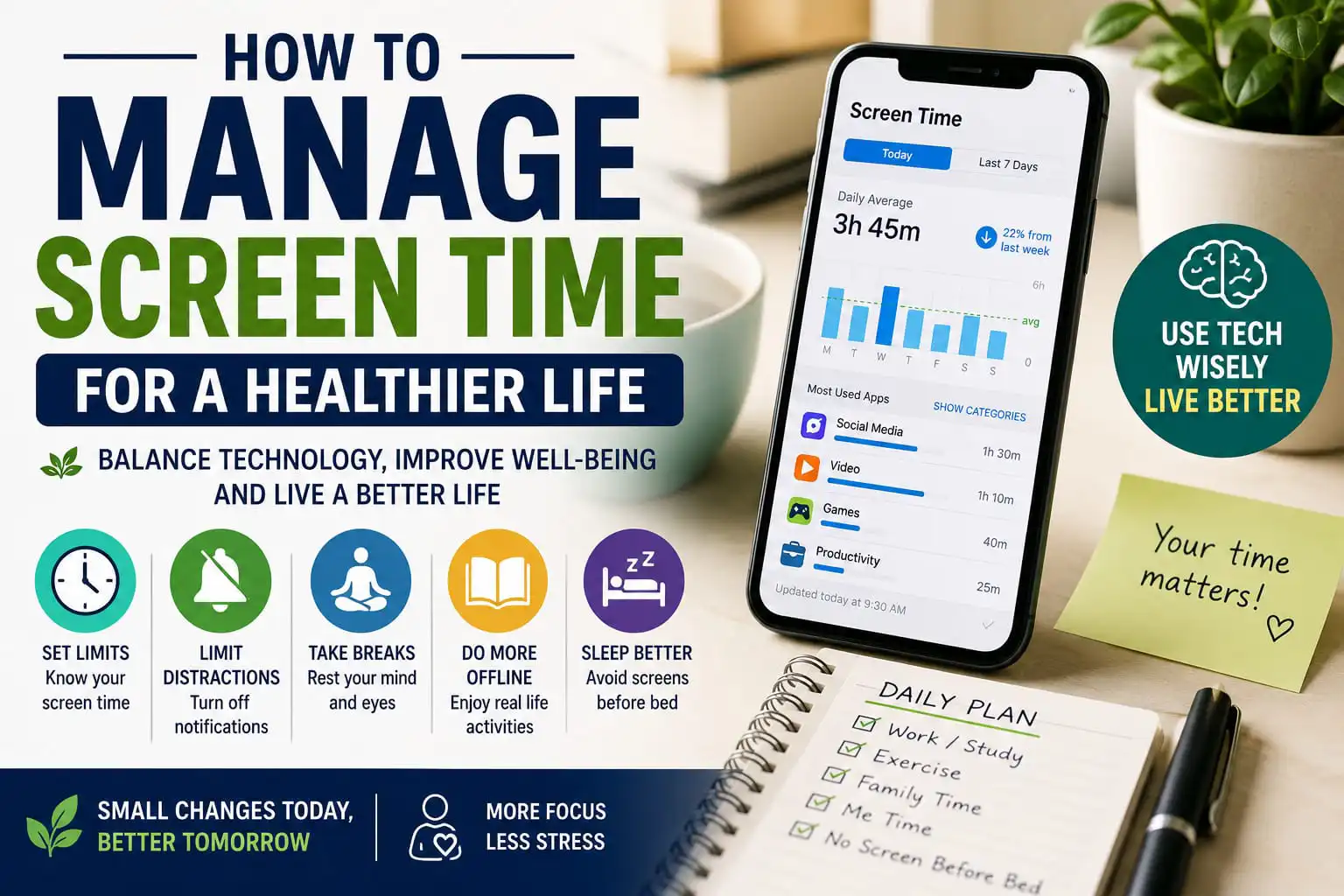
Desktops, laptops, tablets, phones, laptops, tv – we spend a lot of our time working on smart devices. Todays digital era of smart technologies has taken over in all areas of life – work, communication, entertainment, even educating, entertainment and Shopping. However, there are risks that, as technology can be helpful, screen time can lead to physical andmental problems if it is excess.
Screen management doesn’t mean staying completely away from tech or digital devices. Instead, it involves finding the sweet spot to benefit from and to strike a balance for overall health. It only takes few changes to inculcate for a healthier lifestyle.
Even if you work from home, study for your online classes, or enjoy to be active on social networks and browse other internet sources, mastering this skill could be the solution to better concentration, sleep, and a boost for your mental health.
In this guide you can: Find out what screen time is The reasons you should care Understand tips to encourage more sustainable screen time
What Is Screen Time?
Screen time is defined as the length of time an individual spends with digital display technologies, which are commonly associated with devices such as mobile phone, laptop, tablet, video game console, and digital television screens.
All screentime is not screentime The difference in quality of the time spent by the digital devices can be vast- online games might cause problems for us while research or study may be fine. Online gaming as a whole can cause health problems and impact the physical development of us if they spent for longer time period. Online education and in the screen with friend is fine or even help.
Why Managing Screen Time Is Important
In today’s world, we use technology daily to make our life and task easily. If we use technology devices throughout the day without taking breaks, this might have an ill effect on our productivity, health and daily task. Find yourself a right kind of balance and technology should not be distraction.
Potential Effects of Excessive Screen Time
- Eye strain and visual discomfort.
- Reduced physical activity.
- Difficulty maintaining focus.
- Poor sleep habits when using screens late at night.
- Less time for family, hobbies, and outdoor activities.
Signs You May Be Spending Too Much Time on Screens
Most of us haven’t got the clue as how many hours of our lives we spend hooked up to our devices. If some of these are ringing true to you, you know its time to take back a little.
- You frequently lose track of time while using your phone.
- You check notifications even when they are not important.
- You struggle to complete tasks because of digital distractions.
- You often stay up late using electronic devices.
- You spend less time on physical activities or hobbies you once enjoyed.
The Benefits of Healthy Screen Time Habits
Practicing healthy digital habits leads to enhanced concentration, promotes better sleep, stimulates movement, and facilitates opportunities for physical life as much as digitally life. The idea is to diminish use. The idea is not the eradication of our technologies but a consciously guided and directed use.
Practical Ways to Reduce Screen Time
It is really easier and do-able to cut down the amount of your exposure on gadgets and other things you stare at, more often when your time and daily routine is already fixed. Even slow but sure result is sometimes better as well.
1. Set Daily Screen Time Goals
Your first step in limiting excessive usage is to define your goal of the amount of recreational usage, be it, half hour, an hour, two hours etc of such usage per day, having defined, it would be easy for you to keep an eye on, without you’re you don’t have anything to do, but that of scrolling down endlessly.
2. Turn Off Non-Essential Notifications
Receiving continuous notifications make you get sidetracked and check your phone unnecessarily. Turn notifications of non-essential apps off so you don’t get easily distracted and concentrate to an extent.
3. Create Screen-Free Times
Pick and choose times in the day when you can avoid technology screens (unless strictly needed), such as not using them during mealtimes or before you go to sleep.
4. Keep Digital Devices Out of the Bedroom
Put a boundary around the sleep zone for all mobile devices. This helps encourage healthier bedtime habits and limits the allure to browse late.
Use Built-In Digital Well-Being Features
Built-in Screen Time Controls Most smartphones and some computers already come with built-in software that allows you to see how you’re spending time on your devices. These screen time controls also allow you to put boundaries on how long you spend on certain apps.
- Monitor daily screen time reports.
- Set app usage reminders or limits.
- Schedule focus or do-not-disturb modes.
- Reduce interruptions during work or study.
- Review weekly usage trends.
Replace Screen Time with Meaningful Activities
The best advice here when looking for ways to cut back screen time, use fun offline activities. This would work at replacing screen usage with time spent somewhere else.
Healthy Alternatives
- Read books or magazines.
- Go for a walk or exercise regularly.
- Spend quality time with family and friends.
- Practice a hobby such as drawing, cooking, or gardening.
- Learn a new skill through hands-on activities.
Build Long-Term Digital Habits
So when it comes to a healthy use of screens: aim for the achievable-not the impossible. Consistent daily habit change will create bigger, lasting changes than sporadic moments of effort. Let’s build sustainable, productive and empoweringscreen use habits!
Periodically look at your screen-time report on your device and try to make changes if needed; the aim is to use technology in a healthy way and not letting it dominate your life.
Common Mistakes to Avoid
We all want to minimise our screens but many unknowingly continue using habits that put us at higher risk of increased use. Stop falling into these traps:
- Using your phone immediately after waking up.
- Keeping notifications enabled for every app.
- Using digital devices during every meal.
- Spending long periods on social media without breaks.
- Using screens right before bedtime every night.
Recognizing the bad habits in your relationship with technology is the first stage of fixing it.
Frequently Asked Questions
How much screen time is considered healthy?
One screen size fits all… The definition of healthy screen time vary. What’s healthy is different according to your age, priorities, occupation and how you interact with technology, devices and the internet. Strive to have an all-rounded approach of work, play, rest, exercise and human contact.
Should I stop using digital devices completely?
No. Tech plays role in work, school, socializing and relaxing. I use devices with intent and not out of habit or in excessive usage.
Can reducing screen time improve sleep?
The consensus for many folks has been that less screen time before they try to sleep in leads to a more relaxing evening and higher quality rest.
What is the easiest way to reduce screen time?
Begin with one small habit: turn off optional notifications on apps you don’t have to use immediately, schedule time to get screen time-free during the day, or swap one screen block for offline fun you already like doing.
Key Takeaways
- Screen time should be balanced rather than completely avoided.
- Small daily habit changes are often more effective than drastic changes.
- Managing notifications and setting screen-free times can reduce distractions.
- Offline hobbies and physical activity help create a healthier lifestyle.
- Consistent digital habits support better focus, productivity, and overall well-being.
Conclusion
The way Technology has become integrated into our lives is now part of the everyday reality of most of us. However, it also is crucial to use it smartly rather than productively. Developing healthy screen time habits allows you to make use of digital appliances whilst simultaneously preventing them to negatively affect the personal health of any individual.
Use these tips as a starting point and slowly integrate a few more habits as you notice them becoming beneficial-limit distractions, establish some tech-free moments in the week, set some boundary limits and pretty soon you’ll experience healthier tech habits for better focus, improved well-being and the life balanced.