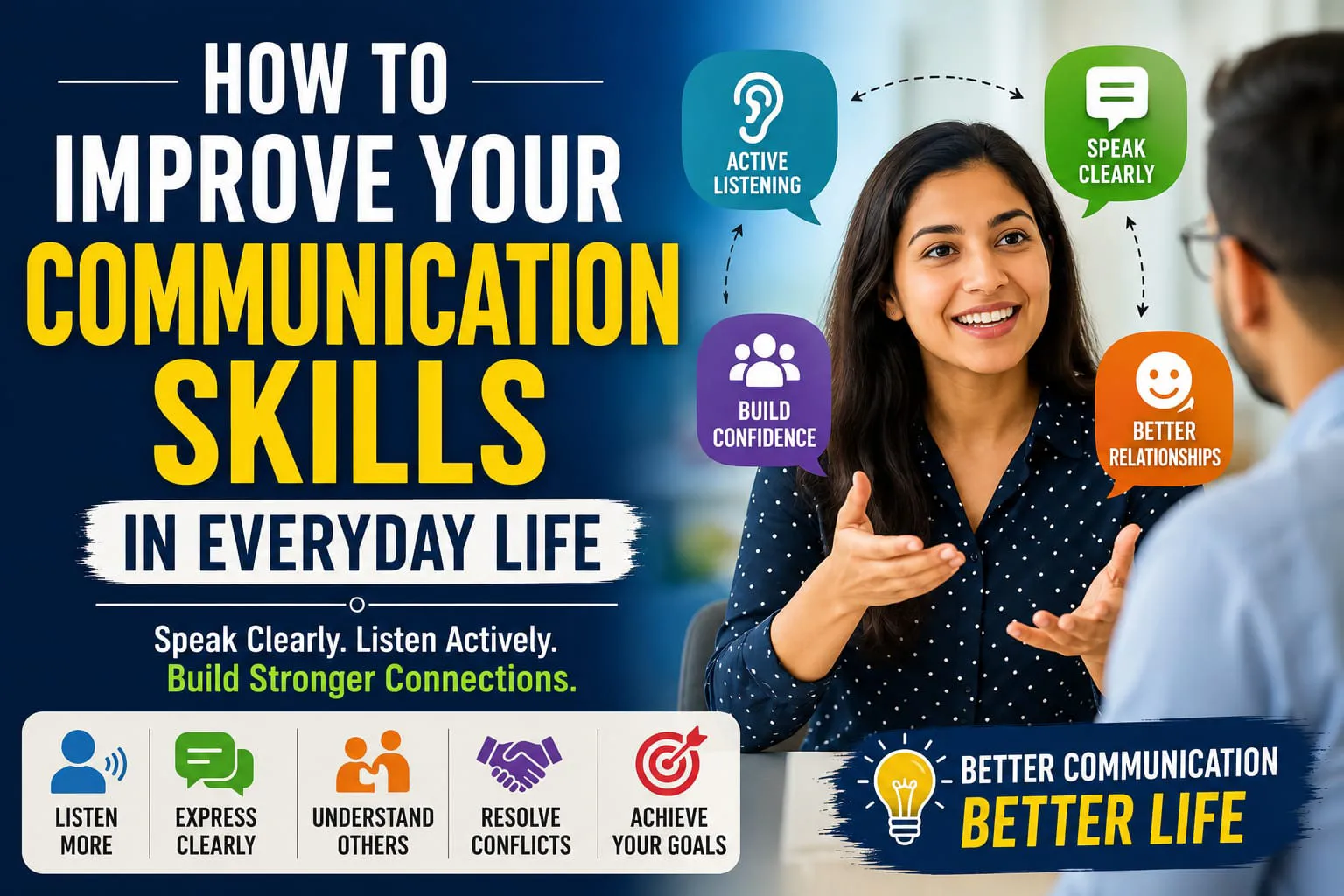
Effective communication skills are one of the most crucial abilities you’ll ever cultivate. As you learn to express yourself to friends, family members, customers, co workers, or unfamiliar individuals, you’ll experience positive connections and misunderstandings are less likely to occur.
Good Communication skills are not just talking but includes effective listening, empathy, a wise choice of words and delivering a message clearly and confidently. In personal relationships, work environment and social skills, good communication is essential to building better trust and self confidence.
Fortunately, communication skills are a talent that every single individual can enhance over time with proper training and constant training. The simple shifts in how you may respond, listen and interact can impact communication for a change.
Below are a few natural and humanlike methods that can be used by you to build rapport with people, that you encounter through everyday life.
1. Become a Better Listener
What Many People Do Instead of Listen Many people get lost in thinking about what to say to respond instead of listening. In fact, a great deal of communicating involves the art of active listening to what someone says.
Helps make sure that you have understood the speaker’s information/view, also lets the speaker know you appreciate and value theirs.
Ways to Practice Active Listening
- Maintain appropriate eye contact.
- Avoid interrupting while someone is speaking.
- Listen to understand instead of preparing your response.
- Ask relevant follow-up questions when appropriate.
- Summarize important points to confirm understanding.
2. Speak Clearly and Simply
Speak plainly; the more plainly spoken, the better understood; nor is there any greater advantage that I know of over great or long and fine word-smiths, than this: that when they endeavor to do very well, they can still say but what we have said with as few words and as much sense as any can well pretend to.
By also using a moderate pace and sorting out what you’re saying before actually saying it, you also give yourself clarity.
3. Pay Attention to Body Language
Your words are only one small part of the messages you communicate through. So does how you stand, how you sit, eye contact, gestures, and so many others.
The right body language can give the appearance that you are more trusting, and confident as well as making you look friendly and more approachable.
4. Think Before You Speak
Take a minute to formulate what you will say so that your response is very clear. By creating that pause you reduce misinterpretation and remove knee-jerk, emotional response.
Communicating deliberately generally results in a more efficient and more friendly dialogue.
5. Build Confidence Through Practice
Experience build confidence, the little wins you achieve throughout your daily conversations can give you more confidence every time.
Learn comfortably and easily. Try to be fluent when chatting with your family, friends and co-workers, in a relaxed and ordinary conversation, on your daily lives. Engage people by asking questions and sharing your views calmly and reasonably. That will help you be more able to talk with others eventually.
6. Ask Meaningful Questions
Thought-provoking questions lead to memorable conversations and prove that you’re interested in learning what your chat buddy is sharing. Don’t just ask yes/no questions! Facilitate conversation with open-ended ones that make others explain.
Asking “What was the best part of your experience?” is going to almost always generate a much deeper discussion than just saying “Did you enjoy it?”.
7. Improve Your Written Communication
Communication involves more than just meeting people face to face. Social media comments, text messages, and emails are all part of how you communicate.
Before you press that ‘send’ button, however, try and give your message a once-over for spelling errors, ambiguous wording or something missing. After all, the more logical and easier to read your message is, the more likely you are to make the desired impression!
8. Practice Empathy During Conversations
When we demonstrate empathy we are working towards seeing and trying to feel the perspective and emotional state of others. It can still enable healthier conversations, even when you don’t agree, to try and take on others perspectives and viewpoints.
When people feel like they’ve been respected and heard, they’re more open to listening to you.
9. Avoid Common Communication Mistakes
A lot of communication breakdown is due to little habits that we tend to ignore. Becoming aware of our habits is the beginning to change.
Common Mistakes to Avoid
- Interrupting others before they finish speaking.
- Speaking too quickly or too quietly.
- Making assumptions without asking questions.
- Using negative or disrespectful language.
- Ignoring body language and non-verbal signals.
- Not paying full attention during conversations.
10. Handle Disagreements Respectfully
Every single day people are going to have different viewpoints. If you are good at communicate then it can mean that you agree to disagree without showing it disrespect.
Try not to raise your voice, stick to the facts and the topic, not the person. It’s normally helpful to try and find some common ground.
11. Daily Habits That Improve Communication Skills
Improve communication and make this changes bit by bit. Practice these simple habits everyday, to slowly be more confident in your everyday talks and communication.
Helpful Daily Practices
- Listen more than you speak.
- Read books and articles to expand your vocabulary.
- Practice speaking clearly and confidently.
- Maintain positive body language.
- Ask thoughtful questions during conversations.
- Reflect on conversations and identify areas for improvement.
Benefits of Strong Communication Skills
Good communications will do a lot for your life long and personally and also professionally. If you’re communicating well, you will be able to make trust easier, overcome barriers and also become friendly relationships with your contacts.
- Builds stronger personal and professional relationships.
- Reduces misunderstandings and unnecessary conflicts.
- Increases confidence when speaking with others.
- Improves teamwork and collaboration.
- Enhances leadership and decision-making abilities.
- Creates better opportunities for career growth.
- Helps resolve disagreements more effectively.
- Encourages meaningful and respectful conversations.
Frequently Asked Questions
Can communication skills be improved at any age?
Indeed. Because it is also one thing, they can be practiced every life long, even as people learn more all ages become best communicator if always to be willing.
What is the most important communication skill?
One of the biggest communication skills to acquire Active listening is probably one of the most crucial of all. Listening to another individual before responding makes the conversations so much better.
How can I become more confident while speaking?
Practice will improve your confidence, start by talking freely in normal conversations, think before important discussions, don’t feel scared about making mistakes while putting forth your thoughts.
Why is body language important?
Augment the message Body language may accentuate and extend spoken phrases. It may aid you construct Rapport by conveying the best expressions in facial eyes, alongside reliable postures.
Conclusion
Good communication skills are important all your life. No matter if it is your parents, friends, peers or newly met people, communicating respectfully and with clarity will lead to better relationships and increased clarity.
It isn’t necessary to overhaul your communication skills with drastic measures. Just working on listening more, speaking clearer, conveying sympathy, and increasing your speaking confidence is key to better communications over time. Keep in mind that you have an opportunity each time you communicate to practice what you are learning, to develop as a person and to increase your connections with others.