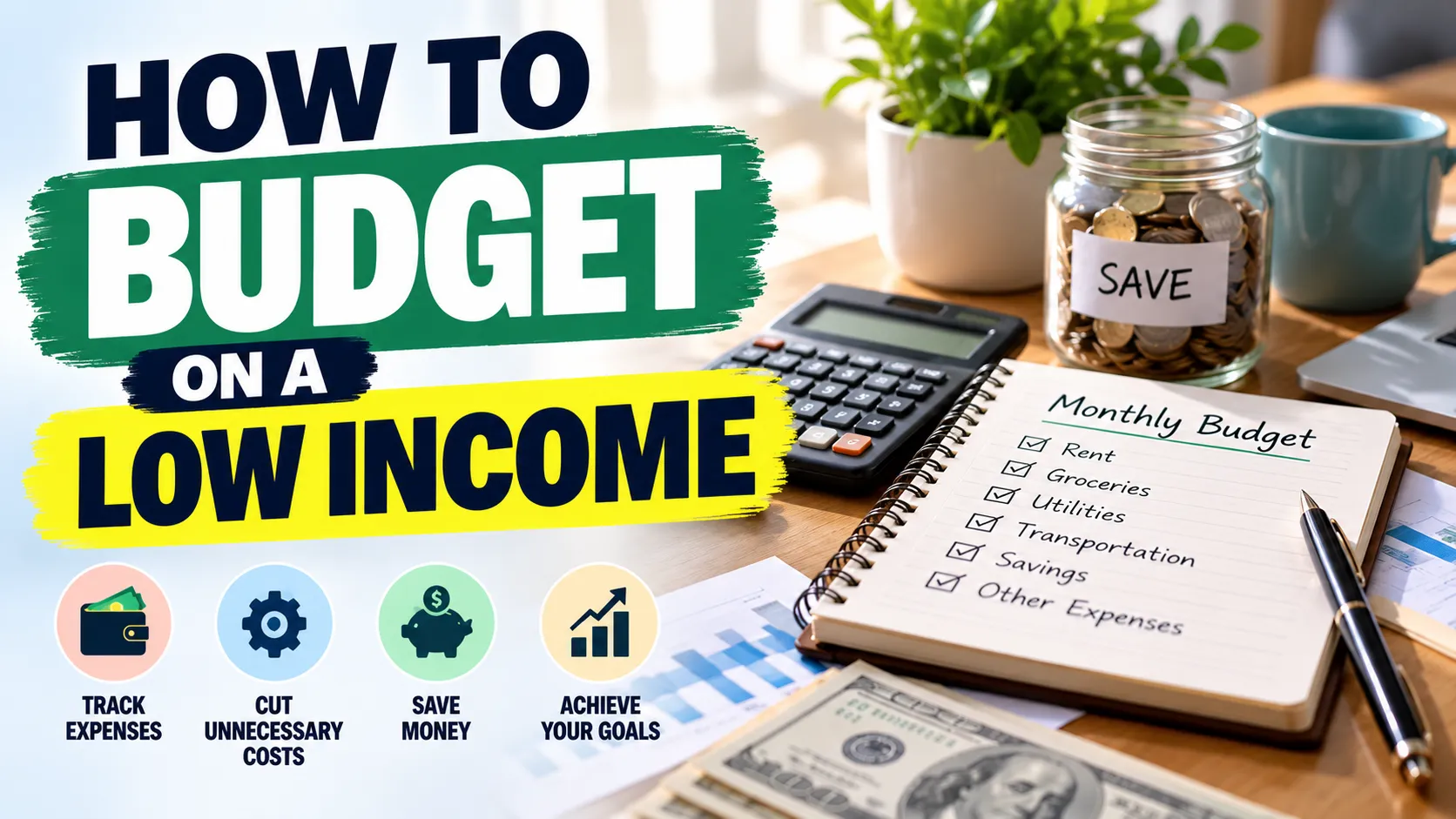
Managing money can be challenging when your income barely covers your monthly expenses. Rent, groceries, transportation, utility bills, and other essential costs can consume most of your earnings before the month is over. When unexpected expenses appear, it may feel impossible to stay on track.
However, creating a budget does not require a high income, complicated spreadsheets, or expensive financial tools. A practical budget simply helps you understand how much money comes in, where it goes, and which expenses need your attention.
If you want to learn how to budget on a low income, this guide explains how to organize your finances, prioritize essential bills, reduce avoidable spending, and begin saving even when money is tight.
1. Calculate Your Monthly Take-Home Income
The first step is understanding how much money you actually have available each month. If you receive a regular salary, use the amount that reaches your bank account after deductions rather than your gross salary.
If your income changes from week to week or month to month, review your recent earnings and estimate a conservative amount you can reasonably expect to receive. Avoid building your budget around an unusually good month.
Include other dependable sources of income if they apply to your situation. Keep occasional gifts, uncertain bonuses, and irregular earnings separate until you actually receive them.
Knowing your realistic monthly income gives you a starting point for making spending decisions without relying on money that may not arrive.
2. List All Your Essential Expenses
Next, write down the expenses you need to cover to maintain your household and meet important responsibilities. These usually include housing, food, utilities, transportation, and necessary healthcare costs.
Your essential expenses might include:
- Rent or mortgage payments
- Electricity, water, heating, and internet bills
- Groceries and basic household supplies
- Transportation to work, school, or essential appointments
- Necessary medication and healthcare expenses
- Childcare and other family responsibilities
- Minimum required debt payments
Write down the amount and due date for each bill. Use actual bills and recent spending records where possible instead of guessing.
If essential expenses already exceed your income, the problem may not be poor budgeting. You may need to explore available assistance, negotiate certain bills, increase income where possible, or seek qualified financial guidance.
3. Track Where Your Money Goes
Small purchases can add up over time, especially when you make them without planning. Take a close look at your spending for the previous month to understand your current habits.
Review bank statements, receipts, payment apps, and cash purchases. Group the transactions into categories such as groceries, transport, subscriptions, eating out, and entertainment.
Tracking expenses is not about criticizing every purchase. It is about identifying patterns that you might otherwise overlook.
For example, you may discover that several unused subscriptions are charging your account every month. Alternatively, frequent convenience purchases might be costing more than you expected.
Choose one or two spending patterns to improve first. Small adjustments are often easier to maintain than trying to change everything at once.
4. Build a Simple Monthly Budget
Once you know your income and expenses, create a budget that assigns a purpose to your money. You can use a notebook, a spreadsheet, or a free budgeting application.
Here is an illustrative example for someone with a monthly take-home income of $2,000. These figures are examples only and are not intended to represent typical expenses in any particular country.
| Budget category | Monthly amount |
|---|---|
| Housing | $800 |
| Groceries | $300 |
| Utilities and phone | $150 |
| Transportation | $200 |
| Healthcare and essentials | $100 |
| Debt payments | $150 |
| Savings | $100 |
| Personal spending and other costs | $200 |
| Total | $2,000 |
This sample budget shows how every dollar can be assigned a purpose. Your actual numbers may look very different depending on housing costs, family size, local prices, and existing obligations.
If your essential expenses are higher, adjust the categories to reflect reality. Do not force your spending into an example that does not match your circumstances.
5. Prioritize Bills When Money Is Tight
When you cannot pay every bill at once, deciding what to pay first becomes especially important. Prioritize expenses that protect your safety, housing, ability to work, and access to essential services.
Housing, basic utilities, food, necessary medication, and transportation needed for employment may require immediate attention. The exact priorities depend on your circumstances and the consequences of missing each payment.
Contact creditors or service providers before a payment is missed whenever possible. Ask whether they offer payment arrangements, hardship programs, due-date changes, or other forms of assistance.
Do not ignore bills simply because you cannot pay them in full. Early communication may help you understand your options and avoid some additional costs.
6. Reduce Grocery Costs Without Sacrificing Nutrition
Food is a necessary expense, but planning can sometimes help households spend less without relying on an unhealthy diet.
Start by checking what you already have in your refrigerator, freezer, and cupboards. Plan meals around ingredients that need to be used before buying more.
Other practical approaches include:
- Preparing a shopping list before visiting the supermarket.
- Comparing unit prices rather than looking only at package prices.
- Choosing seasonal produce when it offers better value.
- Cooking larger portions when the food can be safely stored and reused.
- Taking packed meals to work when practical.
- Reducing food waste by storing ingredients properly.
Generic or store-brand products may also offer savings on certain items. However, compare quality and price rather than assuming every cheaper option is automatically the best value.
A realistic food budget should support your nutritional needs and household preferences. Extreme food restriction is not a sustainable way to manage money.
7. Review Subscriptions and Recurring Payments
Recurring charges can be easy to overlook because they are deducted automatically. Review your bank and card statements for streaming services, memberships, app subscriptions, and other regular payments.
Cancel services you no longer use and consider whether you need multiple subscriptions that provide similar benefits. If a service is important to you, check whether a less expensive plan meets your needs.
Also review mobile phone, internet, insurance, and other contracts when renewal dates approach. Compare available alternatives carefully, including fees, coverage, and cancellation terms.
Do not cancel essential insurance or services without understanding the risks and consequences. Focus first on payments that are genuinely unnecessary or offer poor value for your circumstances.
8. Start an Emergency Fund With Small Amounts
An emergency fund can help cover unexpected expenses such as a necessary repair, an urgent trip, or a temporary loss of income. Without savings, even a relatively small expense may lead to borrowing.
If your budget allows, begin with an amount you can realistically set aside. That might be a few dollars each week or a small amount after each payday.
Set a modest initial goal, such as saving enough to cover one small unexpected expense. Over time, you can work toward a larger reserve based on your essential monthly costs and personal circumstances.
Keep emergency savings somewhere reasonably accessible and separate from the money you use for everyday spending. Choose an account appropriate to your location and consider any fees, withdrawal restrictions, or other conditions.
If you cannot save anything right now because essential expenses exceed your income, focus first on stabilizing your finances. Saving is a useful goal, but it should not come before basic necessities.
9. Use a Budgeting Method That Fits Your Life
There is no single budgeting method that works for everyone. The best approach is one you understand and can maintain.
The zero-based budgeting method
With zero-based budgeting, you assign your expected income to expenses, savings, and other financial goals until every dollar has a planned purpose. This does not mean you must spend everything. Savings can be included as a planned category.
The envelope method
The envelope method sets a spending limit for categories such as groceries, transport, and personal purchases. You can use physical envelopes or separate digital budget categories to keep track of the amounts available.
The percentage-based method
Some people divide income into percentages for needs, wants, and savings. Popular percentage rules can provide a starting point, but they may not suit people whose housing or other essential expenses take up most of their income.
If your budget is already tight, do not feel pressured to follow a percentage rule exactly. Start with your real expenses and adapt the method to your situation.
10. Plan for Irregular Expenses
Not every expense arrives monthly. Annual renewals, school costs, vehicle maintenance, seasonal bills, and certain medical expenses can make a budget difficult to manage.
List the irregular costs you expect over the coming year. When possible, divide a known upcoming expense into smaller amounts that can be set aside over several months.
For example, if an annual bill is $240 and it is due in twelve months, setting aside $20 each month would cover it by the due date, assuming your income and plan remain unchanged.
If the expense is due soon and you have not saved for it, update your budget early. Planning ahead will not eliminate every surprise, but it can reduce the number of bills that catch you unprepared.
11. Find Ways to Increase Your Financial Flexibility
There is a limit to how much you can cut from a budget when most of your spending already goes toward essential needs. In some situations, increasing income or finding support may make a bigger difference than reducing small purchases.
Depending on your circumstances, you could explore additional work hours, suitable part-time work, selling unused household items, or training that may improve future employment opportunities.
You can also check whether local government agencies, community organizations, food assistance programs, or nonprofit services offer help with essential expenses.
Evaluate opportunities carefully. Avoid offers that require large upfront payments, promise guaranteed earnings, or pressure you to borrow money to participate.
Extra work is not always possible, especially when health, caregiving, or existing employment limits your time. Consider realistic options that fit your responsibilities.
12. Review Your Budget Every Month
A budget should change when your circumstances change. Prices may rise, income may vary, or an unexpected expense may require you to adjust your priorities.
At the end of each month, compare your planned spending with what actually happened. Identify which categories stayed within budget and which ones need a different approach.
Ask yourself three simple questions:
- Which expenses were higher than expected, and why?
- What changes helped me manage my money more effectively?
- What is one realistic improvement I can make next month?
Use what you learn to create a more accurate budget for the following month. A budget is a planning tool, not a test that you must pass perfectly.
Frequently Asked Questions
How do I budget when my income is very low?
Start by calculating your dependable income and listing essential expenses. Prioritize basic needs, identify avoidable costs, and contact providers if you cannot meet payment obligations. If your essential expenses exceed your income, investigate assistance and realistic ways to improve your financial position.
Should I save money or pay off debt first?
The right balance depends on interest rates, minimum payment requirements, the risk of missing bills, and your access to emergency funds. Keep required payments current where possible and consider building a small emergency reserve while developing a plan for expensive debt. A qualified financial adviser can help with complex situations.
What is the easiest way to track monthly expenses?
A notebook, spreadsheet, banking application, or budgeting app can work. Record your spending consistently and group purchases into a few useful categories. Choose a method that is simple enough to maintain.
Can I save money if I live paycheck to paycheck?
It may be difficult, particularly when essential costs use up all your income. If you have room in your budget, start with a small, realistic amount. If you do not, focus on essential expenses, assistance options, and stabilizing your finances before setting a savings target.
How often should I update my budget?
Review your budget at least once a month and whenever a major change affects your income or expenses. People with irregular income may benefit from checking their available money more frequently.
Final Thoughts
Learning how to build a monthly budget on a low income begins with understanding your financial situation. Calculate your take-home income, list essential expenses, track spending, and create a realistic plan for the money available.
Look for practical savings without sacrificing necessities, plan for irregular bills, and build an emergency reserve when your circumstances allow. If your income cannot cover essential expenses, remember that the problem may require additional support rather than more spending cuts.
You do not need a perfect budget to make progress. Start with a clear picture of your finances, make one useful change at a time, and review your plan regularly. Over time, these habits can help you make more informed financial decisions.