Does it sometimes feel like the price of groceries, commuting, or pretty much anything just goes up and up? A simple dinner or cup of coffee that was cheap even just a few years back now could be far more expensive, and you’re one of the first thing to be reminded that with that comes that little thing called… inflation!
Inflation is a concept in economics that is more fundamental than most think and affects people at all income and profession levels. Inflation impacts how we budget our finances, personal savings, purchasing power, daily spending, the real value of currency and the cost of living in general. Learning about the basics of how inflation works can lead to smarter decisions.
You might hear about inflation in economic news, but the main concept is easy. It’s the increasing general rise in price of money and cost of goods and services.
Get a better grip of this much discussed subject with our beginner’s guide to inflation – what is it, why is it happening, how does it really impact the day to day, and what can you do to keep more money in your pockets.
What Is Inflation?
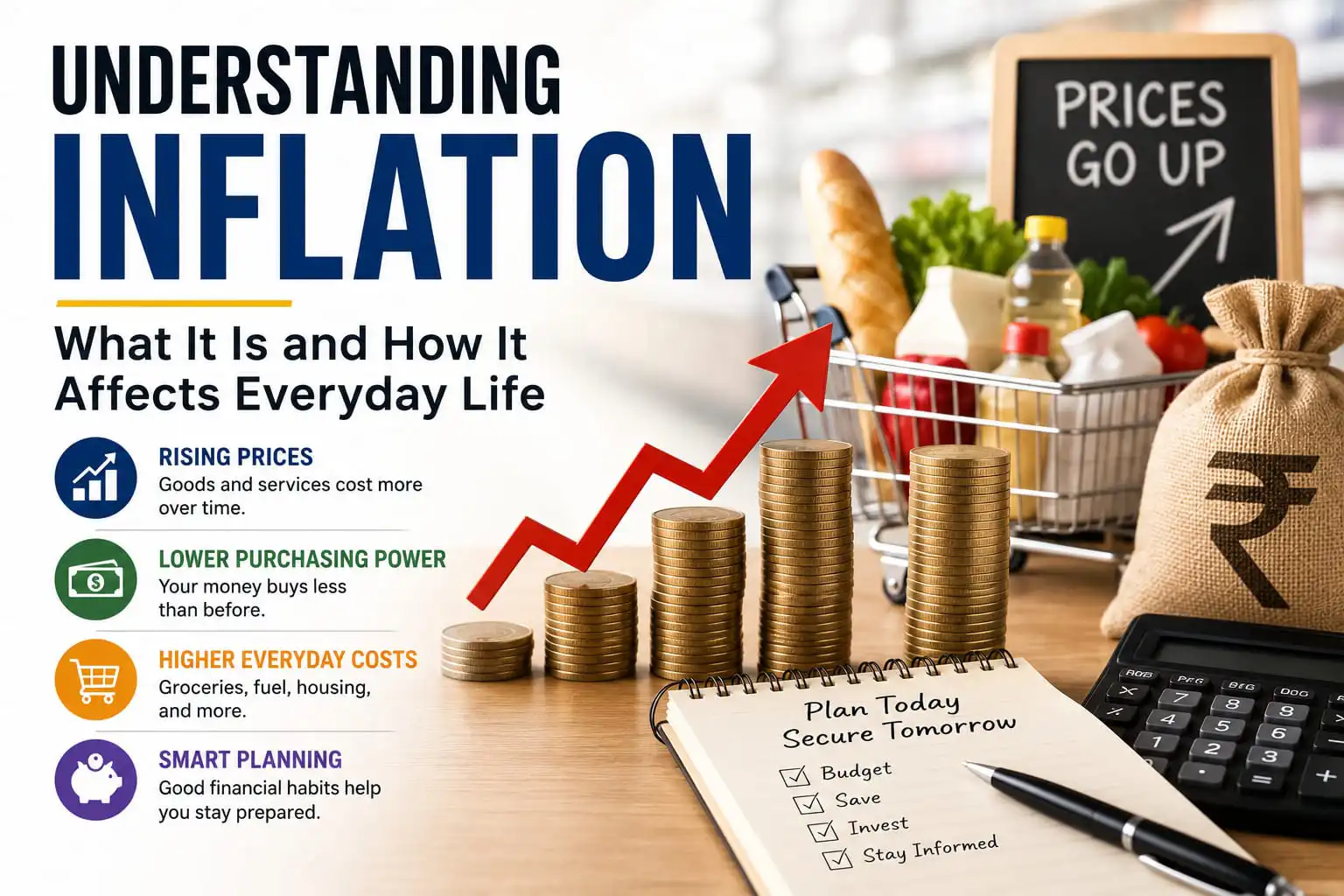
Inflation refers to the speed at which the general prices for goods and services go up over a time period. When prices do increase, you don’t get as much value for your money as you previously did.
If prices were to go up year after year, this would have no bearing on your money until it can no longer afford what it could afford a few years back. When inflation effects people, it is more gradual but it starts eroding the spending power of people slowly.
Why Does Inflation Happen?
Several causes could lead to the development of inflation; normally it relates to demand, supply, production costs or economic situation of the environment. These factors directly have effects on the price that consumers pay for products and services.
Common Causes of Inflation
- Higher demand for goods and services than available supply.
- Increasing production and transportation costs.
- Rising wages and business operating expenses.
- Disruptions in supply chains.
- Changes in overall economic conditions.
There may be numerous factors that can contribute to inflation, as inflation is typically rarely caused by only one single factor, depending on the circumstances.
How Inflation Affects Purchasing Power
Purchasing power refers to the value of your dollar, or the worth of money in the purchasing world. Higher inflation tends to decrease the goods or services a unit of money buys.
This has the effect that to afford the same lifestyle as their neighbours the household would possibly have to spend more for the given income to rise by the same amount.
Why Inflation Matters in Everyday Life
Many daily choices that involve our money, such as budgeting, shopping, saving, or financial planning for the future, were influenced by inflation. With inflation, we have an idea on how much a particular expense might in the future.
How Inflation Affects Your Savings
Spending money means earning money too but how about how money does get you in debt but don’t worry if you earn an amount of money by saving you don’t use up your savings if that amount the price increase like goods and services can make that money worth much less.
This is NOT to say that saving isn’t important! It is to emphasize the necessity of reviewing your finances periodically and how inflation may affect your financial plan goals long term.
The Impact of Inflation on Everyday Expenses
Inflation may impact some products and services you buy and use regularly and it can happen gradually. For households, increasing cost of groceries, transportation, shelter, health care, utilities, school supplies, and entertaining a friend may become common.
Small price raises within a few parts of normal living could all include up, gradually as well as gradually.
Inflation and Long-Term Financial Planning
Remember When you are thinking about money needed in the future you may not get as much bang for your buck than you would today. For everything in life — be it educational future, vacation funds, retirement or a large purchase — keep the inflation factor in the picture for sensible planning.
Reviewing your financial objectives from time to time enables you to change the financial approach as economy dictates changes.
Practical Ways to Reduce the Impact of Inflation
Can’t Stop It, but Maybe Limit the Hit Individuals don’t have control over inflation, but here are practical strategies to lessen its impact:
Helpful Financial Habits
- Create and follow a realistic monthly budget.
- Review your spending regularly and reduce unnecessary expenses.
- Compare prices before making significant purchases.
- Build an emergency fund for unexpected expenses.
- Continue improving your financial knowledge.
- Review your financial goals at least once a year.
Cultivating good, everyday money habits may help when price changes occur over time.
Common Misconceptions About Inflation
Myth 1: Inflation Always Means the Economy Is Performing Poorly
While moderate and gradual inflationary pressures are common for many economies, very high, unsustainable inflation often is associated with more challenging circumstances and can be a source of anxiety.
Myth 2: Inflation Affects Everyone in the Same Way
Inflation affects us all differently, depending on how we all spend, save, earn money and even which goods and services we typically prefer.
Myth 3: Inflation Only Affects Expensive Purchases
Inflation in everyday essentials will even affect simple things, the prices in every single buy everyday will eventually get increase every time that would result your monthly grocery will even higher.
Frequently Asked Questions
Is inflation always a bad thing?
It depends. In normal economics, a modest amount of inflation is a good thing but a rapid rate can impact purchasing power negatively and push cost of living expenses too high.
How does inflation affect my daily life?
Inflation causes increases in prices for everyday goods and services such as groceries, transit fares, housing expenses, healthcare services and utility costs. As prices rise, $2.00 buys less in the grocery store.
Can individuals control inflation?
No. There are a lot of economic forces that contribute to inflation that one person cannot possibly influence. What a person can do is carefully budget and to monitor spending and to anticipate costs and expenses of the future.
Why is understanding inflation important?
Being knowledgeable about inflation can contribute to more savvy financial decision-making, allow the anticipation of altering prices, and formulate realistic life plans.
Key Takeaways
- Inflation is the gradual increase in the prices of goods and services over time.
- Higher inflation generally reduces the purchasing power of money.
- Inflation can affect savings, household budgets, and long-term financial planning.
- Developing good financial habits can help reduce the impact of rising prices.
- Understanding inflation supports better financial decision-making.
Conclusion
Inflation is a natural part of economic cycles. It impacts virtually all facets of the ways in which you and also I live as well as spend. Although inflating cost decreases buying power as well as affects family budgets, knowing how as well as why– as to why prices continue to increase makes taking care of the circumstances extra manageable.
Although nobody is wholly immune to inflation’s impacts, establishing healthy money habits, regular budget checks, and financial awareness will aid you in the management of personal finances. Mastering these economic changes is essential toward financial prudence and security for you and your family’s future.