
Let It Be Known Search has been developed into a must-do activity today. Regardless if or not the fact we are trying to get the most current tid-bits of news, a quality food item solution for one’s hungry little munchkin or family, any type of travel-oriented particulars, we need info around many different subjects from history lessons, shopping information and product endorsements. Our own little friend has been getting a number of billion searches daily; and has grow to be considered as one of the largest internet phenomena now days.
While you do not necessarily think of such complicated technology each time that you use search and search engines, but it is really one of our modern wonders of Technology of World, the results that appear for your query are based on a sophisticated algorithm and on a sophisticated mechanism including identifying sites, structuring the collected information, and finally ranking pages according to relevance.
Learning what search engines do not only help you become an expert Internet User. It’s wisdom in itself, which website owners,bloggers,student,and internet search gurus want to learn.
In this beginner-friendly guide, you will discover the basic procedures that search engines use to locate, arrange, and present worldwide web pages to visitors like us.
What Is a Search Engine?
What do these tools do? The most common search tool is known as a search engine: A search tool is used to carry out research on the web. Rather than browse the internet until you visit hundreds of pages with useful bits of information, you simply type in what you are looking for and the search tool gives you backpages which should answer your question.
Using complex computer systems and algorithms search engine scan billions of web pages then display what’s most applicable to what you are typing the searching for.
Popular Examples of Search Engines
- Bing
- Yahoo
- DuckDuckGo
- Brave Search
Each search engine has its own specialized technology, and its own method of classifying, however they will all adhere to a set of common, universal search engine standards when finding information.
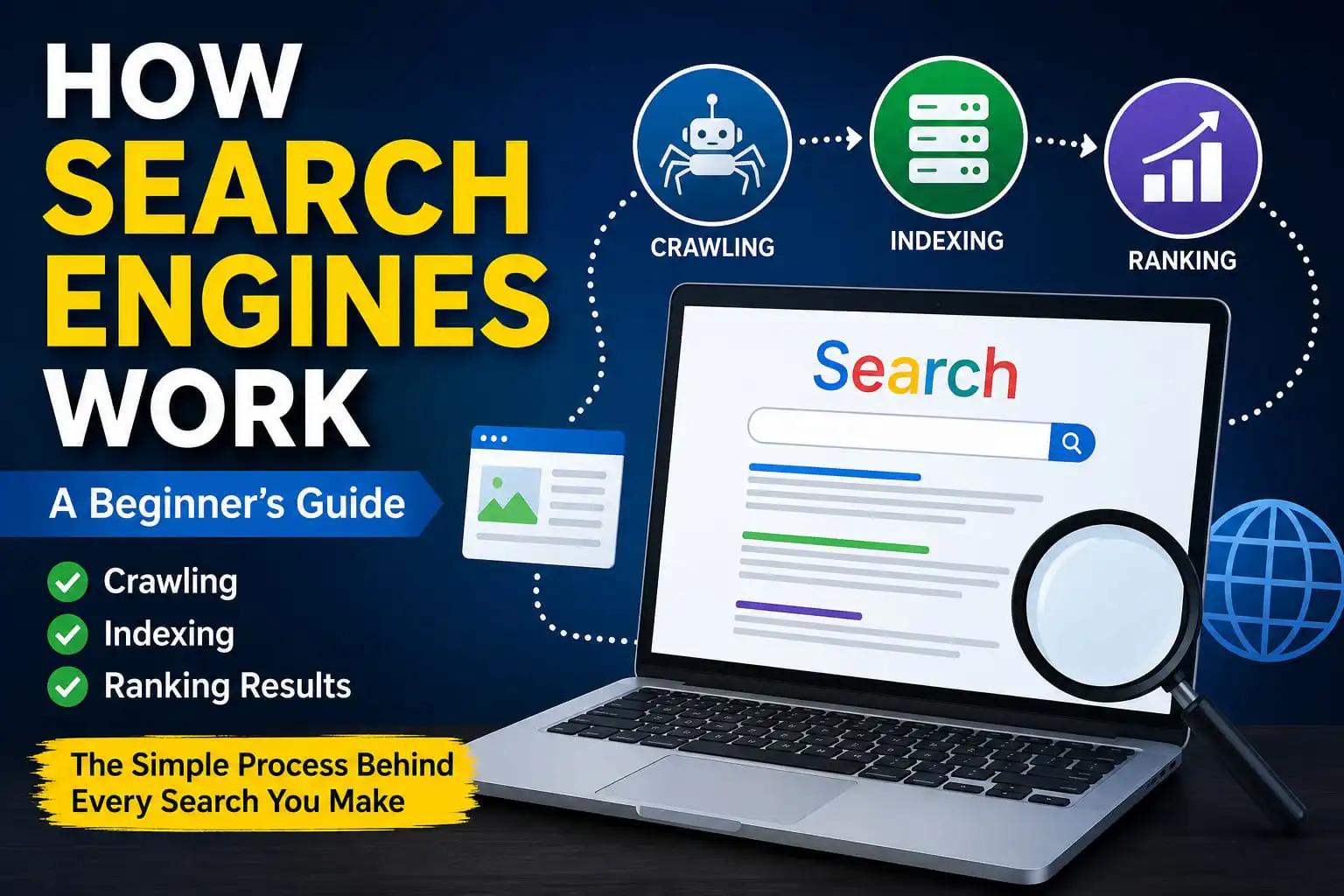
Step 1: Crawling the Web
The first stage of a search engine’s work is called crawling. Search engines use automated software programs, often called web crawlers or spiders, to discover new and updated web pages across the internet.
These crawlers jump from a page to another by following links. While these crawlers are exploring pages, these would store data concerning text, images and also the headings and links contained within the same page.
This task is performed all day long by the search engine crawlers as many new websites and pages go live everyday.
Step 2: Indexing the Information
After discovering a web page, the search engine analyzes its content and stores important information in a massive database known as an index.
The index is essentially like a digital library. Every time that someone makes a search, instead of sifting through the entire content of the internet to provide results for their query, the search engine will scour their index.
Not all of the pages a bot finds get included in the index. That’s because search engines have to look at quite a bit of quality and technical data before they determine if they’ll show the pages in search results.
Why Crawling and Indexing Matter
Normally if a page has not been crawled or indexed the page will never be shown up within the result lists as displayed by search engines in relation to a user-generated search query. It’s for these very reasons most website owners are diligent to create websites with structure and accessibly which search engine can process and index quite easily.
Step 3: Ranking Search Results
Once a search engine has crawled and indexed web pages, the next step is deciding which pages should appear first in the search results. This process is known as ranking.
Once a user enters their search terms, the engine compares the query to the data already collected and indexed. Then, by applying dozens of different factors or signals, it identifies the information that’s most relevant to the user’s search.
We’re striving to provide you with the information you need reliably and as quickly as possible.
Factors That Influence Search Rankings
Search engines employ numerous variables to determine which results appear highest on search pages. Though exact search algorithms have not been revealed and change often, certain standards have held throughout years of search engine optimization.
- Content relevance to the search query.
- High-quality and original information.
- Clear page structure with descriptive headings.
- Fast page loading speed.
- Mobile-friendly website design.
- Secure website connections (HTTPS).
- A positive user experience.
They don’t just factor one thing in, instead they use a combination of elements to bring you to the most relevant answers for your query.
Why Keywords Matter
Keywords Those words and phrases that a person searches from a site through different search engines, the same gives the searched information about the content that the page contains.
Natural placement ofkeywords is important so as to enable search engines to be aware of what you are discussing about in the webpage. Overutilization of keywords makes poor quality of read, is irritiating to visitors, and will not assist in increasing quality.
Understanding Search Intent
Here at search intent. So many different people around the world using Google for so many different reasons.. You are looking to learn how to boil eggs you are looking to compare products you’re looking to access my website or buy something.
Search engines are smart they get this concept, as well as, deliver pages that best align to what users want to gain the right results. Answering true user questions in content is a strong value-ad that a person, and google, will value.
Organic Results vs. Paid Advertisements
Typically, you’ll find both organic search results and paid ads in search engine results pages (SERPs). Despite both types having an appearance similar to one another, you’ll find they perform different functions entirely.
Organic results appear because the search engine considers them relevant to the user’s query based on its ranking systems.
Paid advertisements appear because advertisers have chosen to promote their content through advertising platforms. These results are typically identified with a label indicating that they are sponsored.
Common Misconceptions About Search Engines
- Publishing a website does not guarantee immediate appearance in search results.
- Higher rankings cannot be guaranteed simply by adding more keywords.
- As content will continue to be updated and yourseach systems may evolve , search result pages or positions may fluctuate over time.
- Quality, organized and structured, often triumphs over content written in order to get clicks, for the sake of clicks.
Benefits of Understanding How Search Engines Work
By learning more about the search engines you use for your explorations on the web, you will become more astute, smarter, and eventually you will find more, when searching, for writing or simply as a way to browse the internet. Learning the terms of a crawl, the indexing processes and rankings, are your entry ticket into understanding and exploring how search functions in such a way that is more accurate to your need of searching information.
- Helps you find relevant information more efficiently.
- Improves your understanding of how websites appear in search results.
- Encourages the creation of useful and well-structured content.
- Builds digital knowledge that is valuable for students, professionals, and website owners.
- Promotes better browsing habits and critical thinking when evaluating online information.
Frequently Asked Questions
Do search engines search the entire internet every time I perform a search?
No Search engines do not “scan the whole world Wide web every time you do a search; they review their search indexes of those web pages. 50% quicker to result you’ll get faster and most results will then be displayed right away;
Why do different search engines sometimes show different results?
Different websites use their search ranking formulas as well as their ways of index content and testing them which mean the ranking of search engine search results might get a different ranking.
Can a newly published webpage appear in search results immediately?
Not immediately. Often, a new page needs to be crawled, evaluated and processed before being added to the search engine’s index to even have the chance of appearing in the search engine results pages. That time frame can differ significantly.
What is the difference between crawling and indexing?
Crawling is the activity on an web-wide scale. It basically is just a software going through a web and following every link to see all information available. Indexing refers to sorting, storing all gathered information so it could be used to satisfy search queries.
Conclusion
The best search engines allow users to find information among the vast amount of data collected from billions of web pages in less than one second. Behind this amazing technical achievement are three general steps involved in a search query: crawling web pages, indexing them, and ranking them the best matches.
Once these fundamental aspects are grasped, you should know more about what makes you an informed internet user. When dealing with how web content is structured and disseminated, for sure if your intention is to know more about certain info, a basic idea as to how search engine is programmed should assist you greatly in understanding this most valuable form of technology in internet.