
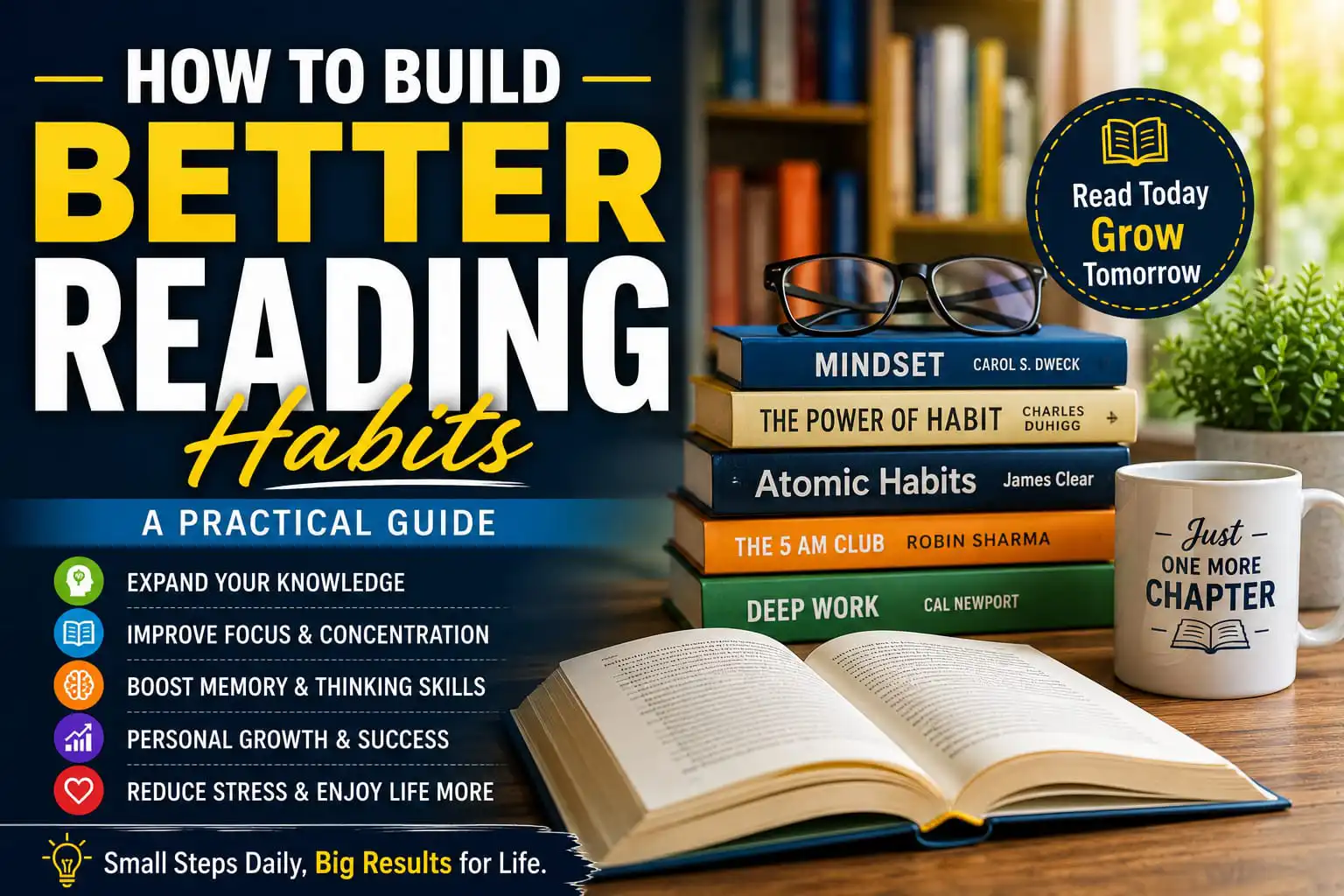
One of the most important habits that can really benefit anyone of you is reading books . Whether reading books , newspapers or even articles published for gaining knowledge of new things. It widens up not only our knowledge but improves vocabulary as well.
People are busy, especially in the digital age, which is constantly demanding for our attention, from streaming content to being engrossed with social media; taking out the time for our personal interests, particularly reading, becomes even challenging. But hey, reading only for a few minutes a day offers advantages that last a lifetime.
Establishing a reading habit does not have to mean finishing an entire book each week. Consistency is the important thing, and picking books that your interest level and intentions will support.
This is where you can discover what all the advantages are of reading, why reading is such a wonderful habit to instill, and practical and specific ways to ensure that you do more reading!
Why Reading Is Important
There is more to be gained from a read than information; better comprehension, curiosity, support for lifelong learning and an understanding of various points of view are all benefits of picking up a good book. Another habit that read improves is your focus by helping your brain perform a task continuously for prolonged periods.
No matter if you are still a student, you’re already employed with your career job, or you are at any other level you will find there always an opportunity in life where you can learn reading and get benefits from the skills.
Benefits of Developing a Reading Habit
Incorporating reading into the everyday and making time, even for small amounts of it will add to self-improvement both professionally and personally in many instances a few minutes at a time add up significantly to one larger session.
Key Benefits
- Expands knowledge across different subjects.
- Improves vocabulary and language skills.
- Strengthens focus and concentration.
- Encourages critical and creative thinking.
- Supports lifelong learning and personal development.
- Provides a relaxing break from daily routines.
Choose Reading Material That Interests You
A major cause of giving up the ghost and renouncing reading altogether is selecting books that one is not ‘into.’ We do not want to be bored while learning. Reading should be a stimulating as well as instructive affair
Try reading about a variety of things until you find things that you enjoy more, then try to stick with those! When you like to read, it doesn’t feel much like work.
Start with Small Reading Goals
When you want to do something, please, don’t impose unattainable goals to yourself, but start with simple aims. In addition to reading only ten or twenty minutes a day, or finishing a few pages of any book on a daily basis.
Making progress on small, realistic tasks builds routine, and reading becomes a natural habit.
Create a Daily Reading Routine
One of the quickest ways to turn reading into an enduring habit, in my humble opinion, is to incorporate reading into your routine. Reading at around the same time each day can help develop it into a regular fixture in your life, rather than an sporadic habit you fit in between bits and pieces.
You may decide to read on a Sunday morning with coffee, at lunchtime or maybe during the evenings before you go to sleep, the important thing is that you do read during this time on the chosen occasion.
Ideas for a Reading Routine
- Read for 15–20 minutes every day.
- Carry a book or e-reader when traveling.
- Keep a book beside your bed.
- Set a daily reading reminder.
- Track your reading progress in a journal or app.
Reduce Distractions While Reading
Reading in quiet surroundings will enable you to concentrate and relax more with the books you are reading. Television will take up all your attention. Background TV and other noises will distract you while you read. You will find it more difficult to remember what you have read once the disruption has passed.
Maybe try putting your phone to silent mode or a place away that may be quieter so you’re not disturbed reading.
Take Notes and Reflect on What You Read
By scribbling notes and key phrases or phrases and a brand new phrase, you may be better off in recalling essential info and phrases. Studying a web page within the back is not actually learning whereas that’s. Reflection offers one the ability to learn in an important deep means.
It isn’t about noting everything. A few critical points after every study may not sound much but, they work for you.
Read Different Types of Content
Switching the formats helps keep the habit fresh and exposes you to a variety of thoughts, and varied content. It broadens your perspectives and develops wider knowledge base and better readers as well.
Examples of Reading Materials
- Books
- Educational articles
- Biographies
- Science and technology magazines
- History and travel publications
- Professional development resources
Common Mistakes That Prevent Consistent Reading
Most people quit reading because they want to see results and pick unrealistic reading objectives as a target. Avoiding these errors will enable you to form a long-lasting habit.
- Setting unrealistic reading goals.
- Choosing books that don’t match your interests.
- Skipping reading for long periods.
- Trying to read in distracting environments.
- Treating reading as a task instead of an enjoyable habit.
Stay Motivated to Read
Like many things we get involved in, the drive for motivation can be nurtured within a day’s schedule and structure. Keep your victories small (a chapter finished, a book done and dusted) as when it comes to reading, consistent velocity always beats anything else.
Each page that you read provides further wisdom and strengthens your thought process. Most importantly, it cultivates a habit, one that can last for a lifetime.
Frequently Asked Questions
How much should I read each day?
There really is no definite number for everybody. However, even as small as it seems, reading for just 15–20 minutes daily could be your new favorite habit over time, especially when done regularly. Consistency is key, so read 15–20 pages and not a count.
What should I do if I lose interest in a book?
There’s absolutely nothing wrong with moving to another book, another article or to an altogether new interest if that’s what makes your heart sing. When we approach reading this way, as a pleasure and an exploration not as a requirement, the process will become even that much more enriching.
Are digital books as beneficial as printed books?
Yes. Books in physical form as well as e-books can be helpful tools for learning and personal development. The format which motivates you to read more is the best one to opt for.
How can I make reading a lifelong habit?
Be sure that your reading aims are practical, develop a daily reading habit, select enjoyable reading sources and take rewards as you hit your smaller goals. Time-tested consistency is the key that will make reading a habitual activity.
Key Takeaways
- Reading regularly helps expand knowledge and improve vocabulary.
- Small daily reading sessions are more effective than occasional long sessions.
- Choosing interesting reading materials increases consistency.
- A quiet environment and a daily routine improve focus while reading.
- Building the habit of reading is an investment over the long haul.
Conclusion
To read is probably the easiest habit for you to form, and one of the most enriching experiences it can give. It allows new concepts, increases critical thought and it aids lifelong learning. Each book or article that you read, each source of knowledge you access contributes more and more to your knowledge base.
No. If you don’t have the time to read for several hours per day, you’d need to be doing other significant self-development activities. The key to being a reading habit is establishing some realistic targets that relate to what you personally like, and actually doing it consistently-not just as an initial project but over years. Small doses are fine, in other words, and can still add up over a lifetime.